Kindle Vs. Paperback

Here is the ongoing debate of Kindle versus Paperback books. I recently had a lovely discussion with my artistic, intelligent and avid reader friend, Elle, about this topic. We both own Kindles and we both agree that a Kindle is modern-age and portable way of reading. We discuss the use of our Kindles often and talk about the pros and cons of reading digitally.

I have just been gifted a Kindle and if you’ve read my 2022 book goals (click here to see them if you missed it), you will have seen that I am wanting to read more on Kindle for the sake of saving money and precious book shelf space – to which I actually have no shelf space left 🤣 The Kindle I received was the Paperwhite 11th Gen (click here to see this type of Kindle) and honestly, I find it so easy to read on. Here are the reasons one avid book reader may like to invest in a Kindle:

⭐️ Portability ⭐️ Storage ⭐️ Money-Saver (in the long run. Initial cost can be a hit to the bank account) ⭐️ Easily read multiple books at the one time ⭐️ Lowering your environmental footprint ⭐️ Read at night time without additional lamp or ceiling lighting ⭐️ Small and compact ⭐️ Light-weight and slim, perfect for handbags or travel bags ⭐️ Easily enlarge text ⭐️ Digital highlighting ⭐️ Dictionary & Translator built in (which is one of my favourite features) ⭐️ Connected to GoodReads reviewing app ⭐️ Can buy new books in an instant ⭐️ Size of a book isn’t as overwhelming because you don’t see your physical progress, you just keep tapping the page and see your percentage down in the bottom corner ⭐️
These pros are really cool, don’t get me wrong! But, it is only fair for us to look at the cons of reading on a Kindle:

⭐️ No book feel ⭐️ No book smell ⭐️ Can’t loan your books to other people ⭐️ Flat battery ⭐️ Cannot physically make annotations in margins or put tags inside the books ⭐️ No bookmarks ⭐️ No physical connection to the book (eg. no hugging, throwing, passionately waving 🤣) ⭐️ Cannot see the coloured book cover all the time ⭐️ Sometimes skips past the book cover and dedication when initially opening a Kindle book ⭐️ Can become too easy to spend money on new books ⭐️ Loss of connection to physical bookstores and libraries ⭐️ Spending more time on technology ⭐️ Cannot appreciate a book you’ve just competed sitting on your shelf ⭐️

At the end of our ongoing discussions about Kindles, Elle and I always agree that there is no such joy, pleasure and comfort as reading a physical book. There is no comparison. Yes, Kindles make our life easier like most technology devices that are created but sometimes the good old fashioned way is still the best. I will always be a physical book lover because I love everything that goes along with it. I love the heftiness of a book, the page turning feeling and the hugging 🤗 I also love bookstores, libraries and all things connected to the environment of books as they always seem to have a calming effect on me. I would love to hear your perspectives and why you read on either Kindle or Paper – comment below 💬
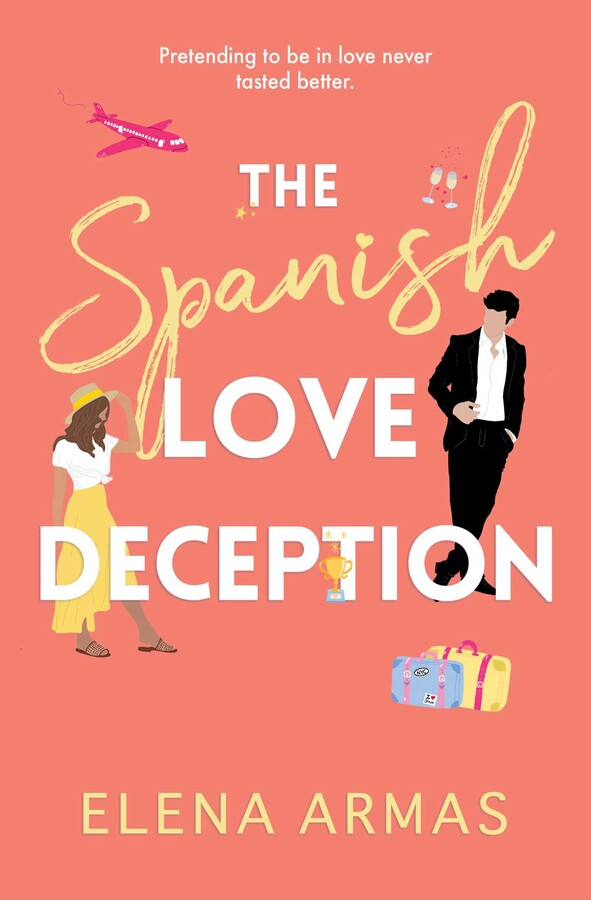
‘The Spanish Love Deception’ by Elena Armas

Okay so you know that chest caving, character loving, don’t touch me or talk to me or even breathe near me kind of feeling you get when reading a romance novel? Well, well, well – ‘The Spanish Love Deception’ will make your heart hurt SO MUCH in the best way possible!!

Not only will I gush to you online and in person at the book shop about this book, but I will also be shouting from the rooftops how DEVASTATED I am about having to wait 8 MONTHS before Elena Arma’s next book arrives on our shelves. Agh, the book pain is real! Elena’s next book is set to be published on the 6th of September and it is titled ‘The American Roommate Experiment’.

SOOooo Mel … get to the good part, the review!

Catalina is single and a short few weeks away from flying back to Spain for her sisters epic wedding. She moved to America in an attempt to reclaim her life and heal her broken heart after breaking up with her soon to be brother-in-law’s brother. Therefore, Catalina feels like the wedding will be a disaster if she rocks up alone. She needs to show her ex-boyfriend and her wide family that she is progressing with her life and achieving success. In walks her solution; office enemy, stubborn, rude and strangely attractive (😉😉) Aaron. He overhears Catalina’s ‘end of the world’ wedding scenario. Taking the plunge, he volunteers himself to be her date! This means flying to Spain together, pretending to be in love in front of her family, showing physical affection, sleeping in the same bed and well, keeping the arrangement hidden so Catalina’s family doesn’t suspect her love life isn’t as desperate as it actually is!

Que their ongoing love to hate relationship, and the cuteness that evolves to their falling in (actual) love. Aaron has a quiet persistence to prove how good of a ‘fake-date’ he is, but secretly and somewhat obviously, it is from a place of wanting Catalina to understand how much he really likes her. It takes a while for Catalina to see and feel that Aaron’s feelings are legitimate, but this just makes for more fun in their games of cat and mouse. Aaron is completely committed to investing in her happiness and wanting their relationship to evolve, regardless of their workplace conflict of interest. I really enjoyed their dynamic and seeing both their walls come down over time. I loved their trip to Spain and how much cultural immersion it allowed the reader to feel. I think this is a romance novel at its best.

Reading this book while suffering from a book slump really made it even more of a stand-out! I finished this book in less than 24 hours. It was EXACTLY what I was looking for and craving. Romance ✅ Love to hate banter ✅ Easy dialogue and world development ✅ Contemporary ✅ If you’re also looking for a book to soar you out of a book slump, ‘The Spanish Love Deception’ has all you, yes you, written all over it! I will 100% be re-reading this book before the end of the year.

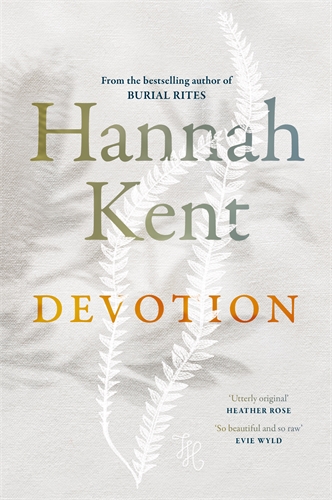
‘Devotion’ by Hannah Kent

Hannah Kent has not failed to rip my heart out and then piece it back together again in her latest historical fiction novel, ‘Devotion’. I am in a book slump after reading this book and I’m finding it so hard to get the fictional characters of Hanne and Thea off my mind. Their love story is one for the ages and honestly, if you have not read this book, I strongly encourage you to find your nearest book store and buy a physical copy. Your note taking (if you’re that way inclined to annotate your books) is going to be flooded with pen marks and highlighted passages.

Growing up in the German village of Kay in 1830’s Prussia, Hanne represses her expectations of female friendships and socialising. She much prefers to be a child of nature as from a young age, believing to hear the whispers of trees, the nearby stream and the movement of air. Hanne knows that her love for nature makes her different from the other teenage girls in the village. It isn’t until she meets Thea that Hanne realises her long inherent beliefs of romantic love are also different.

Hanne’s family are set to follow their local Pastor to the new found land called South Australia. Here their community of Kay can continue to practice their Old Lutheran beliefs and spread the devotion of God. However, in order to get there they must sell everything they own and sail for months on end. (This is the part of the story where your heart will break. You will be baffled, you will find it hard to believe that Hannah has put us as the reader through this much horror, but you will also find it incredibly hard to stop reading).

At sea, they travel with their village for months on end. You feel the fear and uncertainly of being in the middle of the ocean without seeing land in sight, you smell the stagnate underneath living quarters and you sense that sickness and death is looming. It is inevitable and the inevitable does happen, but to whom? We see and feel love bloom, to then be ripped away from us. Hanne and Thea’s story falls short in so many ways but it only makes you realise how quickly your expectations of life can change in one moment.

The third section of this books is a mirage of life, yet through a different and troubling lens. It is raw and harrowing and heartbreaking. I continue to be utterly amazed at how hard hitting the writing of this novel is but yet it is delivered in such a rich and vibrant way. This is a big call to make but I truely believe that Hannah Kent had produced another national and international, award winning fiction. If this book does not move you, read it again! In my eyes, Hannah Kent is the reason we read fiction.

My 2022 Book Goals

  1. Read 50 book again 📚
  2. Read 15 books off my combined GoodReads TBR and physical bookshelf that have sat unread for too long (ekk 🙈)
  3. Read more from the Literature genre (I’ve been throughly enjoying it of late)
  4. Visit and borrow from my local library each month ✅
  5. (Here is a controversial one …) Read at least one book on my Kindle each month ✅

Okay now let me explain these a little more …

Last year I accomplished one of my biggest reading goals I’ve ever set – 50 book! And I did it! 🥳 I aim to pick up more literary novels this year as it is a growing pleasure. Hopefully a large amount of this 50 will be literary.

Now don’t get me wrong, I LOVE a new book and if I’m honest with you, I will still be buying new books – just probably on Kindle or with careful decision making as to whether I really really need the physical copy. I’ve made this goal and decision because my bookshelf is F U L L !! I have no space whatsoever for more books, therefore I need to start reading through all the books I own. Some of these include, ‘Cresent City’ by Sarah J Maas, ‘The Tattooist of Auschwitz’ by Heather Morris, ‘American Dirt’ by Jenine Cummins & ‘Cloud Cuckoo Land’ By Anthony Doerr. I’m one pretty lucky girl to own such amazing books already!

My local library is awesome and they have an abundance of books, from a wide span of genres! I need to utilise my library card a little more this year 📚 And as for my Kindle, I recently upgraded to the new Kindle Paperwhite with the warming back light. I did this because it is more portable (for when I travel), it’s less harsh on my eyes than just the blue light and well… its much more affordable.

Comment down below what your book goals are for 2022? 💫

My Year in Books (2021 edition)

It’s here folks! Here you have it in all its glory – ‘My Year in Books (2021 edition)’ 🥳

2021 was such a fun reading year for me and honestly, probably the best ever in my reading life! This past year I read a total of 50 books and 17, 591 pages! If you’d like to see my individual ratings for each book, you can jump onto my GoodReads (click here) ⭐️

  • 🔦 The TORCH emoji will indicate if these books were part of my Crime Fiction Fanatic Book Club
  • 🎨 The ART PALETE emoji will indicate if these books were part of my Literature Lovers Book Club
  • 🎙 The MICROPHONE emoji will indicate if these books have a review on my blog – have a read!

‘The Friend’ by Sigrid Nunez

‘Bridie’s Choice’ by Karly Lane (re-read)

‘The Dry’ by Jane Harper

‘Before the coffee gets cold’ by Toshikazu Kawaguchi

‘The Year of the Witching’ by Alexis Henderson

‘The 100 Years of Lenni and Margot’ by Marianne Cronin

‘Can’t Say it Went to Plan’ by Gabrielle Tozer

‘Our House’ by Louise Candlish

‘Roadtrip’ by Beth O’Leary

‘Consent’ by Vanessa Springora

‘The Girl with the Dragon Tattoo’ by Steig Larsson 🔦

‘Those Hamilton Sisters’ by Averil Kenny *read our interview here* 🎙

‘A Court of Silver Flames’ by Sarah J Maas

‘Eight Lives’ by Susan Hurley 🔦

‘The Prison Healer’ by Lynette Noni

‘Bila Yarrudhanggalangdhuray: River of Dreams’ by Anita Heiss

‘The Guest List’ By Lucy Foley 🔦

‘The Storied Life of AJ Fikry’ by Gabrielle Zevin

‘In Five Years’ by Rebecca Seale

‘The Last Night in London’ by Karen White

‘Scrublands’ by Chris Hammer 🔦

‘Early Morning Riser’ by Katherine Henry

‘North Star’ by Karly Lane

‘Starfell: Willow Moss and the Vanished Kingdom’ by Dominique Valente

‘Between Shades of Grey’ by Ruta Sepetys

‘She is Haunted’ by Paige Clark

‘A Curse So Dark and Lonely’ by Brigid Kemmerer 🎙

‘A Heart so Fierce and Broken’ by Brigid Kemmerer

‘A Vow so Bold and Deadly’ by Brigid Kemmerer

‘The Wife and the Widow’ by Christian White (re-read) 🔦

‘Heartsick’ by Jessie Stephens

‘The Reading List’ by Sara Nisha Adams 🎙

‘The Memory Police’ by Yōko Ogawa

‘The Wattle Island Book Club’ by Sandie Docker *read our interview here* 🎙

‘The Tribute’ by John Byron 🔦 🎙

‘Thread Needle’ by Cari Thomas 🎙

‘Where the Crawdads Sing’ by Delia Owens 🎙

‘The Mother Wound’ by Amani Haydar 🎙

‘Defy the Night’ by Brigid Kemmerer 🎙

‘The Silent Patient’ by Alex Michaelides 🔦 🎙

‘Love & Virtue’ by Diana Reid 🎨 🎙

‘100 Remarkable Feats of Xander Maze’ by Clayton Zane Comber 🎙

‘The Gilded Cage’ by Lynette Noni

‘Rabbit, Soldier, Angel, Thief’ by Katrina Nannestad *read our interview here* 🎙

‘The Night She Disappeared’ by Lisa Jewel 🔦 🎙

‘The Labyrinth’ by Amanda Lohrey 🎨 🎙

‘The Lost Flowers of Alice Hart’ by Holly Ringland 🎙

‘Deception Creek’ by Fleur McDonald

‘Christmas Wishes at Pudding Hall’ by Kate Forster

‘The Lost Apothecary’ by Sarah Penner

‘Big Little Lies’ by Liane Moriarty

Book Review: ‘The Lost Flowers of Alice Hart’

Wow folks it’s been a hot minute! Where have you been Mel, you may ask? Well, it’s a busy time for bookselling and book recommendations! This makes me incredibly happy but it is also quite tiring, leaving me with limited time to write my regular book reviews. Things will slow down soon and uploading will become more regular – I promise 😉

So, a little while back (maybe 2-3 weeks ago), I finished The Lost Flowers of Alice Hart by Holly Ringland and honestly, I can absolutely see why this debut Australian novel caused a stir of positive discussion in its publication year of 2019. Additionally, I believe it is truely well worth the 2019 Australian Book Industry Award.

To begin with, a little disclaimer that this novel is strongly focused on the effects of domestic abuse and it’s long-lasting repercussions. Don’t let this put you off because it is a beautifully woven story.

Alice Hart is a young girl at the beginning of this novel. She is living on an isolated property with her whimsical, young and intelligent mother who speaks daily with love to her flowers. However her father has a consuming presence in her childhood, utilising narcissistic and abusive behaviours to control both Alice and her mother. Alice is aware of her mothers physical signs of abusive, yet it isn’t until she is on the receiving end of her father’s behavioural abuse does she realise that her childhood is not necessarily a happy one. Events occur and Alice uncovers a hidden secret of her fathers which ultimately leaves her as an orphan. Alice’s world then expands in ways she never knew possible.

Alice’s paternal Grandmother, June (a family member she never even knew existed), becomes her legal guardian. June takes Alice to live on her flower farm, Thornfield. Thornfield actually doubles as both a workplace and a safe house for women and children escaping domestic abuse. This environment of love, support and kindness is all new for Alice and quite hard to comprehend.

We continue to live through Alices’ experiences as a teenager and then as a young woman. Artistically and brilliantly, each chapter starts with an image and description of an Australian native flower. We learn to understand the language of flowers with Alice, where each flower comes from, how they look and what they mean. Without giving too much away, Alice soon becomes tangled up in her own abusive relationship. Interestingly and intelligently, Holly Ringland has peeled back the layers of emotional, mental, financial and physical abusive all in one novel. It is eye-opening, destroying and hard to put down. You want to throw the book across the room in exhausted anger but scavenge it to keep reading! As the reader, you yearn for Alice to see through the behaviours of her partner yet it is so explainable as to see why she doesn’t, creating the perfect depiction for domestic abuse. You’re a witness to her inside thoughts but you’re also weighing up the decisions she’s making from the outside as the reader. It is fantastically terrifying.

I think, if you can give yourself the time before the end of the year, read this book. Or if not, add it to your TBR for 2022. It will stay with you and make you become a full on advocate for exposing and supporting domestic abuse in Australia – maybe even around the world.

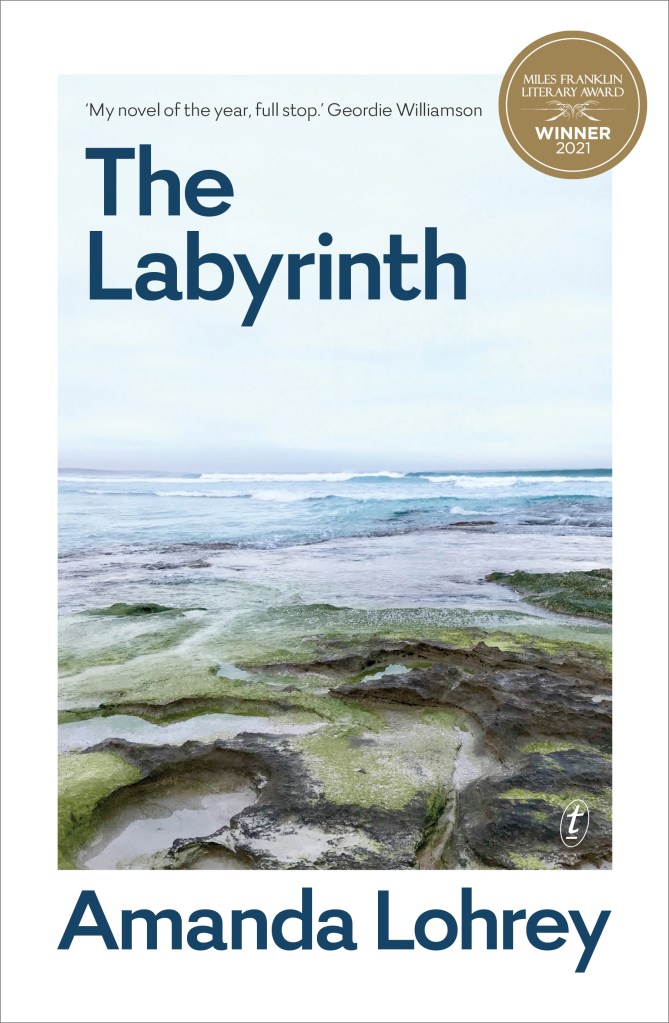
Book Review: ‘The Labyrinth’

I am utterly speechless and surprised. Not only in this book but in myself. Literature is not often my forte, nor do I usually find pleasure and addictiveness in reading literary language, plots and character conversations – yet THIS! WOW! I am blown away and can 100% see why ‘The Labyrinth’ by Amanda Lohrey won the Miles Franklin Literary Award for 2021.

Where to start …

‘The Labyrinth’ begins with the introduction of Erica, our main character. She is reflecting on her time as a child where she has just witnessed her mother abandoning Erica and her brother, Axel. They are left in the care of their father, who raises the children on the ground of a psychiatric facility where he also works as the head psychiatric doctor. This environment sets a feeling and acknowledgement of intense mental health and psychotic episodes throughout the novel. This theme reoccurs when Erica is comparing the life and work of her father, to her son Daniel.

Daniel is an incredibly interesting character in this story as we meet him whilst in goal. Erica bought and moved into a small coastal beach shack to be closer to him. We know that he is in goal after obsessing over a person, mostly through painting and drawing this person over and over. It is implied that this obsession then took a bad turn. Daniel connects to the world through his art, and there is an amazingly dark scene where Erica visits Daniel in goal after she has written multiple times to the goal administration to allow Daniel oil pastels. Daniel receives these but at the visitation with Erica, he breaks one in half, sits half on the table for her and proceeds to place the other half in his mouth, chew it and smirk as Erica. It’s twisted and dark and psychotic. You’re left thinking as the reader, what does this mean?! All the while, Erica continues to visit him due to this feeling of responsibility for him being the way he is and self-sabotage.

The idea of building a labyrinth comes to Erica in a dream and she feels this overwhelming urge to create one. The process of designing, developing, finding the right stonemason, obtaining material and the emotional support along the way, is all part of the core plot. The story is quite simple, yet it isn’t. Majority of my book club really enjoyed this novel and felt that Erica’s journey really did represented a Labyrinth. The circling relationship with Daniel, the moving past different characters and not overly investing time in or with them, or getting to know them. Erica’s dreams and final scenes in the novel were incredibly raw and moving.

I love that the Literature Book Club I’m leading is really pushing me out of my comfort zone. The discussions are AWE-some and really switching on this appetite for more Australian literature. If you’re looking for a novel to ponder over long after it’s finished – read this one!

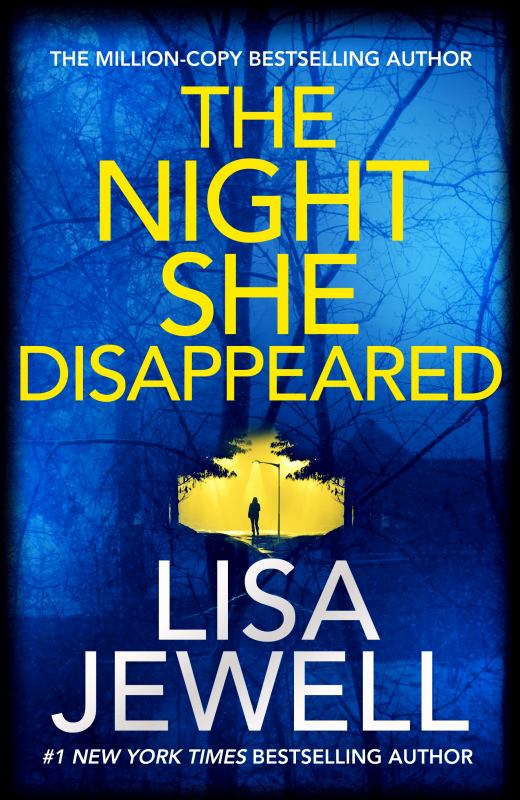
Book Review: ‘The Night She Disappeared’

I can safely say that since forming and leading our local Crime Fiction Fanatic Book Club, my standard of crime fiction reading has boosted. Anddd… maybe I’m becoming a little more picky and snobish about which crime fiction novels actually peak my reading interests. I believe these feelings are arising due to the variety of novels we’re choosing to read and discuss – I’m really starting to find which themes, plots and character perspectives I like to read.

‘The Night She Disappeared’ by Lisa Jewell follows three perspectives. Tallulah is a 20 year old woman, mother, social studies student and in a relationship with Zach. They share a one year old son, Noah. He is the sole reason their relationship has found new life. Tallaluh does not feel that Zach’s forceful and controlling behaviour in their relationship is something she can foresee for her long-term future.

Kim is Tallulah’s mother and we also hear from her. Tallulah, Zac and Noah are currently living with Kim and she sees them as a happy couple and family trying to make things work. Until, Tallulah and Zach go out for an evening to the local pub, leaving Noah at home with Kim, and there is no reason for them not to come home after an enjoyable dinner and a few drinks – so where are they at 1am and the next 24 hours? Kim starts to question how healthy Tallulah and Zac’s relationship actually was.

Sophie is new to the little english village where this novel is set. She is our third perspective. She’s a writer of detective novels and is currently in the process of trying to write her next book. Her and her partner have moved into temporary teacher accomodation (with some sneaky history to it, you’ll find out if the final chapter 😉). Her partner is the new head teacher of the local college that Tallulah and Zac attended, and somehow, it’s a bit like their stay was set up … When Sophie comes across a note at her back gate saying “Dig Here” she is thrown into uncovering clues connected to the disappearance of Tallulah and Zac. Things start to play out a bit to much like her own crime fiction novels … IS somebody setting her up?

I won’t be giving too much away in this review, as I know some of my book clubs members read my blog and I don’t want to sway their reading process! However, what I will say it that this definitely wasn’t one of my favourite novels we’ve read this year. I felt it lacked something for my reading tastes and I wasn’t overly ‘wow’ed’ by the ending or characters. It did have good twists and turned but now, after reading around 6 crime fiction books this year, it’s hard not to start comparing. Our meeting, as it usually does, may change my point of view. Here are a few questions I intend to provide the group:

  1. How did you view Tallulah and Zac’s relationship?
  2. What did you think of Sophie being a crime writer herself and how this tied into the plot?
  3. Did you view Scarlett as a manipulative character or a product of her environment?
  4. Tallulah’s sexuality played a major role in this book. What do you think would have happened if her relationship with Zac continued?
  5. Arachnophobia: the extreme and intense fear of spiders. How did you predict this statement would tie in?

Happy reading folks! 🤓

Author Talks with ‘Katrina Nannestad’

Katrina Nannestad is an Australian Children’s Author who spent a number of years of her childhood in Wagga. She is a multi-award winning writer and is pictured here with her beautiful pup.
📸 by Rebecca Rock

Hello Katrina and a warm welcome to melreviewsherbooks! It is an absolute pleasure to have such a talented and articulate children’s writer such as yourself featuring on my ‘Author Talks’. Katrina is the author of over 10 published children’s novels and we will be talking about two of her recent historical releases in this interview, those being ‘We Are Wolves’ and ‘Rabbit, Soldier, Angel, Thief’.

Katrina, congratulations to begin with on having your novel, We Are Wolves, awarded the winner of ARA’s Historical Children and Young Adult Novel of 2021, winner of the Book Links Award for Children’s Historical Fiction 2021, and winner of the ABDA’s Best Designed Children’s Fiction Book of 2021. Wow – when writing We Are Wolves, did you know you were onto something big?
I really enjoyed writing We Are Wolves. I found the research fascinating and fell in love with my characters as I wrote their story. But I wasn’t quite sure whether or not I’d created something worthwhile until my agent and publisher had read it. Their response and that of the early readers was encouraging. But still, I was most anxious to learn what young readers thought of the story. Once I got the thumbs up from my target audience, I was able to relax and get excited about writing further historical fiction.

Did you follow the same planning, research and writing process for Rabbit, Soldier, Angel, Thief as you did with We Are Wolves? If not, how was it different?
Yes, it was a similar process. I began by doing some reading around the topic before deciding what form my story might take. I spent some time developing my main characters, then took them with me – holding their imaginary hands – as I continued my research. Their presence helped bring the facts, the details and the big historic events alive, and helped me to decide what was relevant to their journey. Finally, I refined my plan and got writing.
But of course, the process is not quite so linear as that. There’s a lot of scrambling back and forth between all the steps, and extra research takes place right through to the very end.

World War II is known as such a dark, emotive and traumatic time in our world history. What has inspired you to write two novels set in this time period?
I stumbled across the story of the Wolfskinder (We Are Wolves) by accident. I hadn’t planned to write a war story, but what I read about these children amazed me – that they survived on their own in a hostile environment, sometimes for years after the war. I was also surprised that I’d never heard of these children before. I thought perhaps others were unaware of the Wolfskinder, too, in which case it would be meaningful story to tell.
I really enjoyed the challenge of writing We Are Wolves, and the response of readers was positive, so I was keen to attempt a second war novel. Again, with Rabbit, Soldier, Angel, Thief, I have tried to share a lesser-known aspect of the Second World War.
I think it’s really important that young people are aware of the events that have shaped our world, and many are keen to explore big issues. Historical fiction allows them to discover these stories in a format that is accessible – interesting and age-appropriate.

In Rabbit, Soldier, Angel, Thief, Sasha is a 6-year-old boy thrown into a war-torn and violent journey that will shape him forever. How do you ‘get into character’ per-say and write from the perspective of a young male child?
I always try to live in the story with my main character, whether I’m writing comedy, mystery, adventure or history. It’s the way I work, and I don’t really know any other way to do it. I can’t dip in and out. I need to be emotionally involved, to feel like the characters and setting and events are real.
I had to do a lot of research for Rabbit, Soldier, Angel, Thief, because I knew so little of the war from the Soviet point of view. My head became filled with details about Russian village life, the sufferings of the Soviet people, the Red Army, the Battle of Stalingrad, and the westward advance all the way to Berlin. But the thing that was most helpful in gaining an understanding of how a child might experience these events, was Svetlana Alexievich’s book, Last Witnesses: Unchildlike Stories. This book records Soviet people’s personal accounts of what they experienced as children during the Great Patriotic War (the Second World War). I have never been so affected by a book in my life.

My goodness Katrina, I have to admit, the last line of this novel broke me! Did you always know how Sasha’s story would end at the beginning of your writing process?
I had a fair idea of how it would end but played a lot with those last lines so they’d have maximum impact.
As I got towards the end of the story, I did consider a different conclusion. I actually wrote two endings, but my original idea won out!

From the bottom of my heart, thank you Katrina for joining me on ‘Author Talks’! It has been an absolute pleasure 💐 What’s next for you?

I am currently writing my third historical novel. It’s also set during the Second World War and tells the story of a little Polish girl. More will be revealed later!
At the same time, I am writing a lighter adventure series for younger readers (7-10-year-olds) called The Travelling Bookshop. Book 1 is out now and I’ve written the next two. You can take a peek at books 1 and 2 at www.harpercollins.com.au/cr-110017/katrina-nannestad/ 📚
This year has been very quiet, of course, but I have some lovely bookish adventures penned into my 2022 diary already – writers’ festivals and school visits. I can’t wait to be out and about once again, sharing the delights of reading and writing and daydreaming with fellow enthusiasts.

You can find a number of Katrina’s books at Collins Booksellers Wagga Wagga online or in person.

For more information on Katrina and her books, you can visit her website, Facebook and Instagram 📚

Book Review: ‘Rabbit, Soldier, Angel, Thief’

If I was not in public right now writing this, I’d be crying. I’m not a crier when it comes to novels but, just wow, this book moved me! Regardless of age demographic and whomever this book is targeted towards, I strongly encourage all ages to read this – no restrictions. Now let me tell you why:

This Russian inspired story is like nothing I’ve ever read before. Reading and hearing from the perspective of a young 6 year old boy by the name of Sasha, we learn what living through the trauma of World War II was really like. This novel is fresh, current and important. The title ‘Rabbit, Soldier, Angel, Thief’ is so critical to the story.

Rabbit. As a child before the thick of war, Sasha was know a ‘Little Rabbit’ to his Mama. I believe this represents his time of innocence and pure joy as a 6 year old living life in a small loving village. His Papa has been lost in the war effort thus far, but this is the extent of his loss and tarnished childhood. His Russian community works together on their collective farm, known as a kolkhoz. This was his sense of normality. His life at this point was surrounded by love, flowers and games.

Soldier. Soon Sasha is thrown into a life he’s forced to live – a war-torn orphan who is taken in by soldiers of the Red Army. This new journey of his story is a violent push into the reality and consequence of war times and what will now define his life. The Russian people turned soldiers (as many of them were because they genuinely just wanted to protect their ‘Motherland’) become his new family. The way Sasha identifies and describes them in the novel is very child-like, which allows us as the reader to see this environment through his eyes. The regiment included Papa Scruff (a father figure to Sasha who had a dark unmanageable mop of hair), Grumpy Boris (constantly grumpy and not interested in childish antics), Invincible Ivan (get’s injured in every German encounter but survives every time), Windy Rustkov (who’s stomach really cannot handle cooks food and limited ingredients of potatoes and cabbage) and many more. This time as a solider was very crucial to the next part of his journey.

Angel. The Angel of Stalingrad. Sasha’s regiment takes in a frightened and lone newspaper reporter for a short time. During his stay, Sasha shares his story thus far with whisps of humour, storytelling, song and dance. Again, this is the child-like element of the story and showing the reader how different experiences, significant events and conversations can be altered through a younger perspective. This reporter named Sasha ‘The Angel of Stalingrad’ for his his ability to boost moral through song, story, affection, personal care and cuddles in the Red Army. Papa Scruff played a huge role in who he became through this time on his journey.

Thief. This is where we are currently, in the present with Sasha. He is in a war hospital healing from incredible trauma and he refuses to speak. He instead is collecting and thieving from other war patients, doctors and nurses around him. They know he is doing this but they allow him to take the items anyway because as they believe it will help him relive and recover his story. Spoons, feathers, watches, flowers, eight buttons, a shovel and a pair of clean underpants are just some of the items he takes. We live through these items with Sasha and learn his story along the way. A clever, clever plot structure.

All in all, I look forward to seeing how this novel is received in the book world. Katrina Nannestad‘s novel ‘We Are Wolves’ was selected for the 2021 Children’s Book of the Year Awards Shortlist. I have no doubt this novel will be a strong contender for the 2022 CBCA winner. Her writing is literary, emotive and honest but appropriate for a younger audience. Perfect for younger readers who like to delve into historical fictions and wonderful for adult readers looking for a little escapism.