Author Talks with Kate Mildenhall

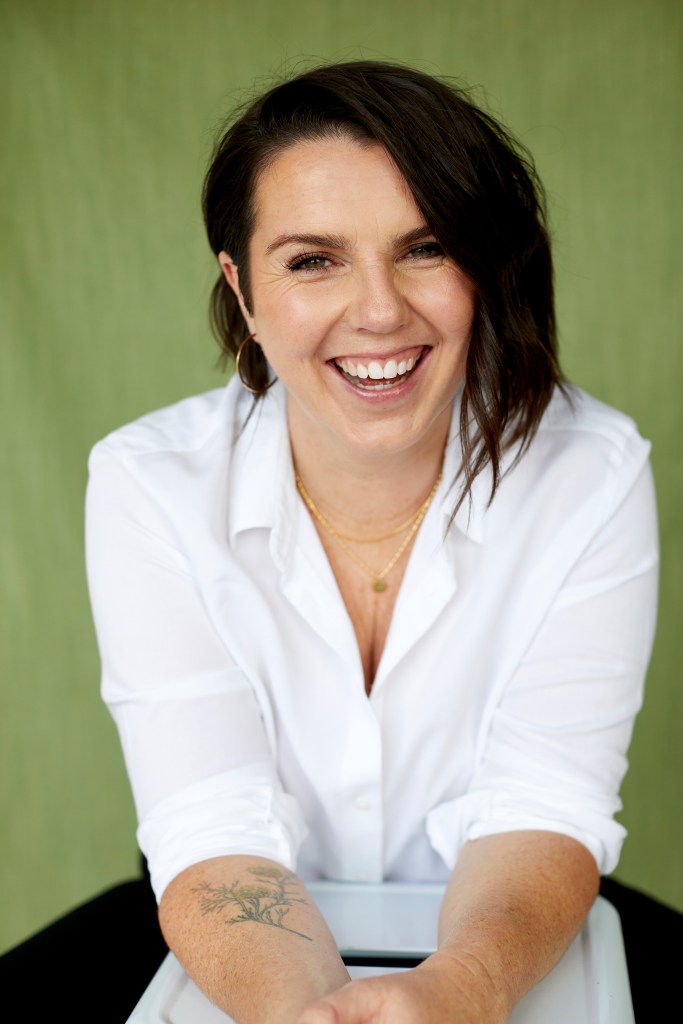
Bestselling Australian Author, Kate Mildenhall 📸 by Emma Carr

Kate Mildenhall is the author of Skylarking (2016) and The Mother Fault (2020) and most recently, The Hummingbird Effect (my favourite book of 2023!). She also co-hosts The First Time Podcast – conversations with writers.
Kate lives on Wurundjeri lands in Hurstbridge with her partner and two children. She is currently undertaking a PhD in creative process at RMIT University. She is currently working on her fourth novel.

Kate, welcome to Mel Reviews Her Books 💫💖👏🏼

The Hummingbird Effect has been at the top of my favourite 2023 novels since I finished it! Kate, where did the idea of The Hummingbird Effect start for you? Where were you and what were you feeling?

Thanks Mel! I can promise you that authors never get enough of readers enjoying their books! The seed for The Hummingbird Effect came from a story my uncle told at a family party, about a local abattoir that burned down years after it was decommissioned. He described how the many years of fat and sawdust in the floorboards meant that the fire was fierce and quick. That image immediately captured me – there is nothing quite like the electric feeling of a new story sparking in the brain – and led me to researching the Angliss meatworks in Footscray and the lives of the workers there, particularly the women.


What I found in the archives were references to a slaughtermen’s strike in 1933 against the new chain system of slaughtering – designed to make the process cheaper and more efficient as it required unskilled labour. It’s the same system used in abattoirs everywhere today. I started to think about the nature of progress, these moments of change throughout history on which the future pivots. The strike was unsuccessful and the chain system came in, but what if it hadn’t? What might that mean? These questions – through four years and lots of trial and error – led me to the creation of new narratives across the present and future which also explore the lives of women and their work and the nature of progress and innovation.

The 4 (and some would argue 5) interwoven storylines are all raw, addictive to read and confronting. How did you determine which character would take up more of the novel than another?

Before the novel looked like it does now, it only followed the 1933 story of Peggy and Lil. After some early (not great!) feedback from my publisher, and in the midst of Covid lockdowns I began reimagining the story to expand further into the future and thus tell the stories of multiple women all dealing with the same kinds of issues of change and labour – albeit in very different contexts (the four years and lots of trial and error part!).


The stories of Hilda in 2020, La and Cat in 2031 and Maz and Onyx in 2181 (and the river and the AI chatbot!) all poured out of me quickly but they were a mess. The fun (and tricky) part was reassembling them in a way that worked for the reader and helped to thread the connections I was hoping to make about the idea of unintended consequences. I’d read and loved novels like Michael Christie’s Greenwood, Jennifer Egan’s The Candy House and Anthony Doerr’s Cloud Cuckoo Land, and as an exercise, I parsed these books to find out exactly how and when the authors transitioned between narratives and how they kept the reader hooked to the page. This exercise inspired me to take risks with the way I broke up and connected the stories of each of my characters.


I love all of the women in The Hummingbird Effect and feel deeply connected to their characters – I wanted more story for all of them, but a book can hold only so much!

Can you explain to us a little bit about the jaw dropping diagram/algorithm that is inside The Hummingbird Effect? How was this created and what was the process of creation like?

I wanted to create an algorithm that could uninvent a human innovation in an attempt to save the world, but I knew I didn’t have the smarts to do it myself! Through the glorious network of writers I found visual designer Eva Harbridge – both a talented designer and deeply interested in ethical AI – and we collaborated to create the image that can be seen in the novel.
This was such an exciting, inspiring and deeply satisfying experience. Over three weeks we met online and discussed my research and ideas and sent hundreds of emails back and forth as our ideas took shape, and then Eva created a number of different versions of the diagram focussed on different components and styles, you can read a bit more about the process and see some of the images here.


I now want to work with Eva on every project I do. The collaboration was a vital part of my creative process and allowed me to see and connect parts of the novel I hadn’t done previously. Plus I get to see her beautiful design in the finished novel!

Kate, your storytelling is like nothing I’ve ever read before in the best way possible. I now want to consume ALL of your writing! Do you feel like writing and storytelling was always going to be your career path or was it unexpected?

I think the path for many writers is always a little meandering. I wanted to be a writer as a kid, and then life took me in other directions for a time. When my kids were born the urge to write returned in a visceral way, and I applied for and began the Professional Writing and Editing course at RMIT. This was the best decision I ever made, leading directly to me beginning, and subsequently getting published, my first novel Skylarking.


Luck plays a huge role in getting published, along with perseverance and some degree of talent! It’s something many of our guests talk about on The First Time podcast when they tell their own path to publication stories. I’m so grateful that I followed the instinct to get back to the page, and then for the many serendipitous moments that have allowed me to
keep writing books since then.

Kate, thank you SO MUCH for spending the time to share a little part of your experiences and writing with me on Author Talks. I’m so grateful to have had the opportunity to meet at WAM and create a connection 💫😊
Author Talks with Isobel Beech

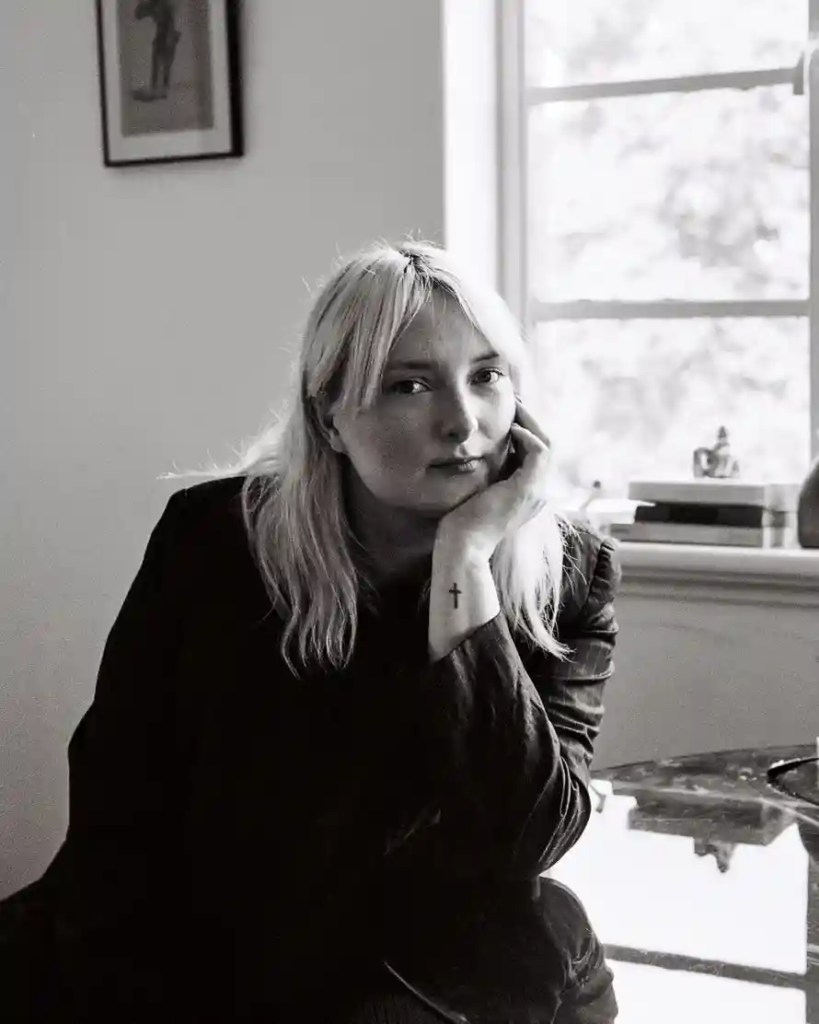
Isobel Beech is an up and coming, young Australian writer. Her first fictional novel ‘Sunbathing’, was published with Allen & Unwin this month (May, 2022). 📸 by Claire Summers

Isobel Beech is going to take Australia by storm! With a background in copywriting, creative and internet news media, she is well versed in the book world. Her first book titled ‘How To Be Online and Also Be Happy’, was published in 2021. Her spectacular debut fiction called ‘Sunbathing’, has been published with Allen & Unwin this month (May, 2022).

Welcome Isobel and thank you so much for being a part of my Author Talks space online! It is an absolute pleasure to be discussing your new novel and writing experience with you 😊💬

Isobel – wow congratulations on such a moving debut novel! How long has it been in your heart to write fiction? Have you always seen fiction in your writing journey?

Well, I only started doing writing stuff around ten years ago but the first few things I ever wrote were fiction because I was studying a Bachelor of Creative Writing at RMIT. A lot of the curriculum revolves around poetic and narrative-based writing techniques, so I suppose I learned how to write – or learned how I might someday want to write – with fiction.

 I’ve done a fair bit of non-fiction writing since then for online and print media but fiction writing is just less of a pressure cooker I think. It’s so much more open-ended, so much more creative, you can really go wherever with it and say whatever needs to be said. And with it you can build the worlds you wish you lived in, or the worlds you wish you had access to. Like with Sunbathing, so much of the driving force behind the story there is about having a final conversation with a person you’ve already lost. That kind of closure you can only dream about. Writing this book gave me that.

The feeling of your writing style had me captivated from the very instant I started reading Sunbathing. That feeling of connection didn’t waver and had me finishing your novel in less than 48 hours. How long did it take you to plan, write and have Sunbathing published with Allen & Unwin?

Thank you! I’ve heard that people are finishing it quickly which I definitely take as a compliment; I love being able to read a book in a couple of days, I think it really helps to feel like you’ve been transported and lived it yourself.

And I didn’t plan the writing process at all really, I just began. I was at a writing residency in Italy and just wasn’t sure what to do with my time; I wasn’t feeling very motivated or like I had anything worthwhile to say at the time, so I just started writing some stuff down to pass the time. Things I saw that day, dreams I had, the smells and sounds around me. Then the document gained momentum and I began to find bits I liked in it that I wanted to interrogate more. And then I realised I wanted to bring the grief stuff into it – something I was kind of wading through at the time. 

The writing of the first manuscript took around three weeks, then probably six months to sort out and edit and rearrange on my own. Which is remarkably quick for a novel, but I think I just had this spare time and was obviously really invested in telling this story and a lot of it wasn’t fiction – not the feelings or the essence of it – so it kind of tipped out of me. That was in 2019.

By the time I decided it was finished, I actually didn’t know if I wanted to share it with the world at all. Because it felt like a pretty big thing to write about and I was afraid of putting it out there, I guess. But I met with Kelly (from A&U) and we talked about how we saw the book and what it might mean to me or to others as a published thing and she just made the decision really easy. We edited it in 2021 between March and December, and so all up it was probably just under a two-year project. 

So, quick to write and quick to read as it turns out.

I really enjoyed the namelessness of the main female character. She is one person healing from grief, yet she is many. She is one 21st century woman, yet she is many. Through this, I ultimately felt extremely connected to her. What does her namelessness mean to you in the story? Did you begin with a character name or was she always nameless?

She was and absolutely for that very reason. I’ve always enjoyed being able to step right into a character and I feel like the less information you’re given about them – particularly the superficial stuff – just makes that easier.

In the beginning she was genderless, too, and a lot the talk of ‘women’ and ‘men’ stuff included ideas and feelings on gender identity and how there’s so much outside of that binary and what that means for us and our relationships. But in the editing process I was convinced, and rightly so, that these ideas weren’t being given enough air time within the narrative to be doing them justice. So we culled that stuff and she became a she. 

I think it works and is good, particularly for the function of her experiences as a daughter of a dad and what that means for their dynamic, but I’ll have to save the gender dysphoria for the next book.

What has the feeling been like for you, to walk into a bookstore and see your debut fiction novel on the shelf? Or turn on your social media to see your novel pictured, shared and reviewed with so much love?

It’s just a total smoothie of feelings right now! I feel lucky, confused, delighted, exposed. I had no idea what this time was going to be like but thinking about a few months ago, I realise I was being super pessimistic (my editor will attest to that). I just had this idea in my head that it was going to be really challenging, I guess because I’m writing about something that makes me feel vulnerable, and I was thinking I’d be having a hard time with it out there in the world, being consumed by people and commented on. But it’s just been the total opposite of that. It helps that people are saying really nice things about it, like I haven’t really been hit with any criticism yet so maybe ask me again then, but so far it’s felt like a really worthwhile thing to have done. 

A friend said to me the other day, like, how great it is that somehow, this thing that used to cause me all this agony is now the source of all this solace and warmth, and that’s true. I’m suddenly associating this pretty painful thing with good feelings, with these incredibly meaningful conversations and connections. And that’s just the most beautiful, strange, incredible thing.

Thank you Isobel for sharing a piece of your time with me on melreviewsherbooks.com 💖