Author Talks with Rhianna King šŸ¦œ

šŸ“ø Australian Debut Author, Rhianna King

Birds of a Feather is Rhianna King’s debut novel and by gosh, will it blow your socks off!

Rhianna is a professional communicator in State Government environmental agencies and has worked within an Aboriginal-led not-for-profit organisation as well. She’s also a graphic designer, having launched her own freelance business in 2015. How dynamic and talented is this woman who now adds ‘author’ to her resume as well!

I cannot thank Rhianna’s wonderful Affirm Press team for reaching out to me, gifting me Birds of a Feather to honestly read and review + have this opportunity to chat with Rhianna herself šŸŽ™

Welcome to the blog Rhianna! šŸ’–

Rhianna, how does it feel to be a debut Aussie author? Can you speak to the experience of being signed with Affirm Press and how the journeyĀ has been so far?

Being a debut Aussie author has been more wonderful than I could have possibly imagined (and I spent a lot of time imaging it!). I was lucky enough that Kelly Doust saw a place for Birds of a Feather in Affirm Press’s incredible collection of commercial women’s fiction and I have loved every second of working with the Affirm Press team. They have guided and advised me at every step, with respect for my vision, and the wisdom of experience.

Stepping behind the curtain of the publishing industry has made me fully appreciate how many people it takes to get a book published and in readers’ hands – the editors, cover designers, type setters, printers, marketing and publicity gurus, voice-over artists, those who get the books on the shelves and those who sell them. The experience has also shown me how much support there is out there for authors. Australia has such a wonderful community of people who love books, write them, enjoy talking about them, and are happy to spread the word about books they’ve enjoyed through their social and online platforms. Connecting with other authors and book lovers has been one of the best parts of this journey.

Birds of a Feather is being absolutelyĀ DEVOURED in my household! I’m reading on my lunch break, as soon as I get home and right before bed. When did you know that Beth and Elsie’s story was a keeper? – Thank you! 😊

I started writing the book during 2020, after Zoom trivia and puzzles had lost their novelty, because I wanted somewhere to escape to. I grew to love Beth and all her quirks, and I adored Elise’s character, so, once I started, I kept writing because I genuinely wanted to spend time with them. Being in lock-down gave me a whole new appreciation for being able to spend time with friends and family and in the natural environment so, I guess, it was a love letter to all the things I was missing from my life at the time. I also wanted to write a story that was different to anything I’d read before and I was keen to make a contribution, however small, to increasing representation of diversity in commercial fiction.

Beth’s winnings certainly throw her stickler budget and tightened nature out the window. I really enjoy watching her unfold and let in the world around her. Did you always know where Beth’s story started and where it ended? Or were you just along for the ride with her?!Ā 

I did have a pretty structured plan for the book before I started writing it, which I guess is ironic since the story centred around encouraging Beth’s character to be more open to going with the flow!Ā 

Much of Beth’s rigidity was in response to her family’s complete lack of structure – she enjoyed order while they preferred spontaneity, she liked well-made plans, where they took a laissez-faire approach to life. But I wanted her to see that it doesn’t have to be one or the other; if you open your heart (even a little) and are prepared to step out of your comfort zone, you can still be in the driver’s seat of your life but also find unexpected joy along the way.

I adore the passages where we watch, feel and listen to Elsie and Beth spend precious time together. Is there anyone in your life or from life experiences that influenced the loving, kind and special familial relationship these two have?

I was so blessed with two incredible grandmothers. Both were remarkable women and, incidentally, both were writers. Spending time with them was such a gift and, even though they’ve both been gone for many years, I still miss them. 

I think the relationship between grandparents and their grandkids is so special because in many cases it’s all love, no responsibility. For Beth, Elise was the one person who she felt ā€˜got’ her when she didn’t feel like she belonged in her immediate family, and the two were bonded by their love of the natural environment. I think that having someone in your life who you trust, and with whom you share a common interest, means you always have someone to feel at home with.

Rhianna – thank you so much for your time and generosity in sharing your answers with us on Mel Reviews Her Books šŸ’–

You can find Rhianna and I on Instagram Live this morning at 10am šŸŽ„

Author Talks with Maxine Fawcett

Australian Debut Author, Maxine Fawcett šŸ“ø

There is no doubt that Maxine knows her words! She has written for MamaMia in Australia and Mummypages in the UK. With a BA in Communication and Art History from the University of East London, it’s an absolute given that her debut novel ‘Everything is Perfect’ would be incredible!

Welcome Max, to Mel Reviews Her Books šŸ’–

Congratulations Maxine on your debut novel Everything Is Perfect published with Penguin Australia! How does it feel to be an official author and can you describe to us your firstĀ pinch meĀ moment?

Thanks Mel! After a decade of attending courses, writing my first novel, pitching it again and again and again, receiving rejection after rejection (crying in my car more than a few times reading the first line of those emails that start something like, ’thank you for sending us your manuscript, even though we liked it we can’t take it further on this occasion’) then starting another book and then getting signed by PRH, it feels surreal but I’m also proud of myself that I kept going.

That’s the hardest thing, with no guarantee of anything, the drive to keep putting your bum on the chair and carrying on.

The first pinch me moment was seeing it on the shelf in Big W, and signing a copy for a lovely lady called Barbara who had picked it up to buy.

Your main character Cassie, has a number of secrets piling up and at some point everything is bound to explode and some people will become hurt by the consequences. What inspired you to write about a woman who has a seemingly happy, content and fulfilled life on the outside, but on the inside, she’s not the person she truly wants to be?

I was half way through my forties when I started Everything is Perfect and couldn’t have written Cassie at any other time. I had been journalling about my own feelings to do with ageing, peri menopause, my own identity and how I felt about no longer being seen.

Her wry voice came to me one morning as I was sitting in my local cafe having coffee (which is why ā€˜Black Honey’ coffee shop features in the book) and I wanted to explore the experiences of a midlife woman who seems to have it all but underneath is hiding everything.

Something I’ve chatted about with my own friends.

Going through the process, understanding and accepting how some children struggle in an educational setting is also a strong theme throughout your novel. I really appreciated that you shared this aspect and awareness! Was this always an initial thread in your novel or did it develop over time?

Having had my boys go through Primary school, I did want the struggles some children face to be an integral part of Everything is Perfect. There are so many parents doing an outstanding job of advocating for their kids but finding it extremely difficult to be heard in the school system.

I wasn’t writing to point any blame as the teacher’s my boys had – they were all outstanding! – but there were moments when the system wouldn’t bend to accomodate a child who may need something different and this was very frustrating.

Max – what does your day-to-day life look like now as a published writer? Is the second novel underway and does the process of writing look different the second time around?

If it works – stick to it is my motto! So I’m trying to do exactly the same thing as the first time around.

Some mornings I journal, others I get an idea and jump straight in. My writing time is generally 9.30am – 11.00am. Monday – Friday.

I’m also having to remind myself what it’s like to return to the beginning and make peace with the messy draft that emerges before any editing can be done. I’ve learnt to love editing and shaping a story from an idea.

Max, it’s been an absolute pleasure chatting with you here and also in person (virtually šŸ˜‰) on Instagram! I cannot wait to read your next novel and celebrate with you again!

One Book One Temora w/ Fleur McDonald

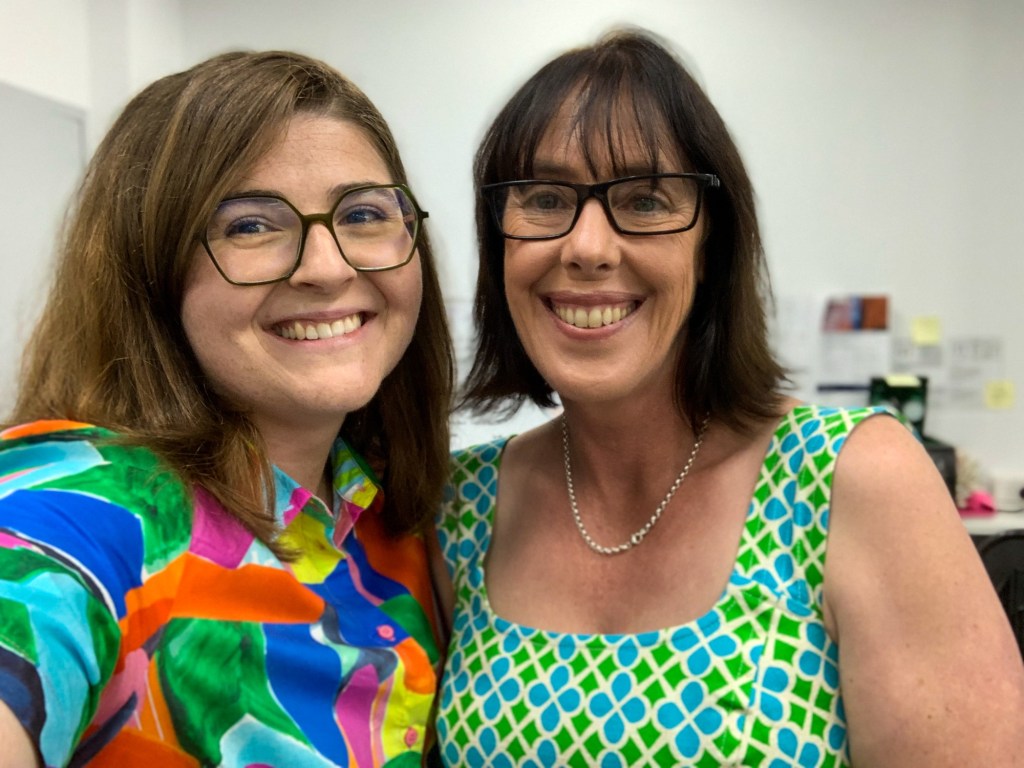
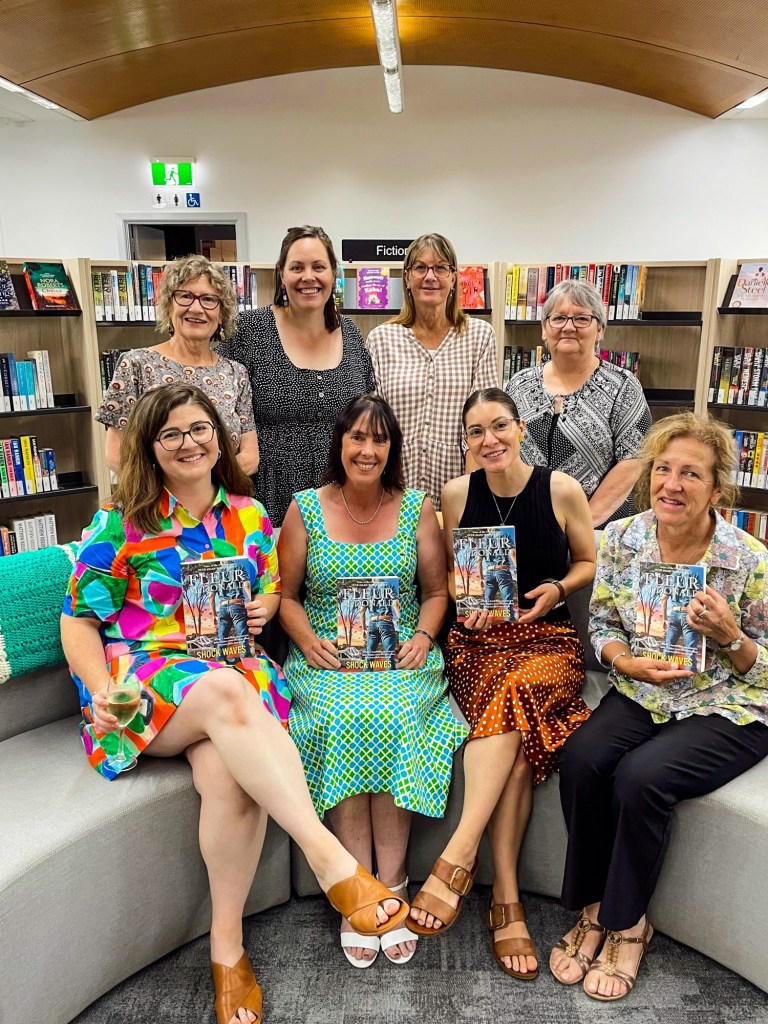
Last night I had the absolute pleasure of interviewing bestselling Australian rural fiction author, Fleur McDonald, at One Book One Temora.

This annual book event is held at the Temora Shire Library and the beautiful community of Temora comes out to spend an evening listening to an Aussie author, of whom they’ve all read one of the authors’ books for their book clubs.

Fleur is incredibly warm, kind, open and willing to share her knowledge about the book industry and writing fiction for over 15 years. She publishes two novels a year while still running a farm over in Western Australia. She is very involved in her small town community and gives back when she has time off everything books. This truly shows in her passionate discussions about the importance of community and connection.

And in talking about community and connection, one rural town that does it so well is Temora. The Temora Shire Library is a hub of chatter, regular borrowers and weekly program goers. The team there are not only approachable, full of life and generous, but they also represent a pivotal consistent hub in the small country town.

The wonderful Wendy handmade this super special Peachy 🐱 bookmark for me in thanks and I’m OBSESSED! How special and what a talent! Thank you Wendy, in more ways than one!

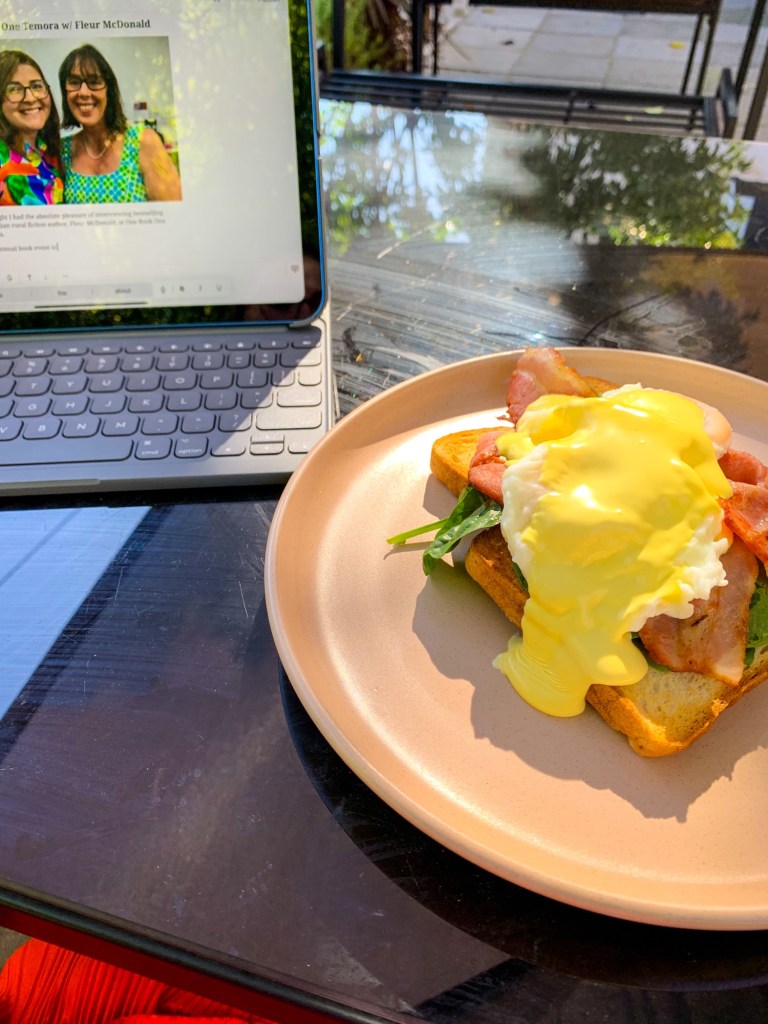
Writing this bookish experience and enjoying a delicious Eggs Benedict, I can’t help but smile and feel gratitude for meeting such wonderful people again this year. Being invited back to 2024’s One Book One Temora is an absolute privilege šŸ’–

Author Talks with Steph Vizard

šŸ“ø 2022 HarperCollins Banjo Prize Winner, Steph Vizard

Steph Vizard has burst onto the Australian romance writing scene with her debut & award winning novel, The Love Contact.

Steph has a wealth of experience in the Australian and international book industry. From studying Literature at Oxford University, to working in publishing in London, to now writing her own Australian story which has won the 2022 HarperCollins Banjo Prize. I think Steph is in for an absolute cracker of a writing career ā­ļø

Welcome Steph, to Mel Reviews Her Books šŸ’–

Steph, congratulations! A published novel AND the winner of HarperCollins Banjo Prize for Fiction! Can you share with us a little bit about your journey in applying for this book prize and what life as an author has been like since?

Thanks so much! I wrote The Love Contract during my maternity leave and then submitted it to the prize when I went back to work. The process for the Banjo Prize is that you submit the whole novel so I tried to have my manuscript in the best shape I could when I sent it off. A few months later, out of the blue, I got a call from HarperCollins to tell me that I’d won the prize and that the book was to be published. It was a truly magical moment!


Life as an author has been a whirlwind and an incredibly fun ride. There have been some massive highs – seeing the cover for the first time, holding the first real life copy, a book launch surrounded by my friends and family, doing an interview on live TV. That said, I had a 3-month-old baby when the book was published so that’s kept things very real! One of the best parts of being published has been meeting so many other talented Australian writers – it’s the most supportive gang of people!

The Love Contract had me hooked from the beginning! I absolutelyĀ adored Zoe and Hazel(nut). You’ve written the realities of motherhood in such an accurate light and formed it into a gripping plot line. Did you always know motherhood would be the leading theme in The Love Contract?

I’m so glad it had you hooked – I was so keen to write a book where the reader wants to keep turning the pages! I think when I started to write The Love Contract I knew that baby Hazel would be part of the story, as she’s the reason Zoe and Will are forced to spend so much time together. But I think it caught me a bit by surprise how much I had to say about motherhood. I think I was hungry for stories about women trying to do all the things, including career and parenting, that didn’t shy away from the really tough stuff but also showed the incredibly funny and joyous parts of parenting.

Will, what a sweetheart. With his stiff, business-like composure whenever the topic of work is discussed but then his carefree and loving nature with Hazel. He’s swoon worthy! How did the characters of Will, Zoe & Hazel come to you?

I love Will! He has a lot of qualities I find very attractive – he’s smart, acerbic and (secretly) very caring. I like that he’s a straight shooter and isn’t a people pleaser – which is a nice ballast to Zoe. I think he was inspired by people I’ve met who are incredibly brilliant at their jobs and work super hard but have never stopped to think about why they’ve chosen their particular path.

With Zoe, I really wanted to write a romantic comedy heroine who is pretty pulled together and trying to pull off the life she wants to lead – she’s just completely overwhelmed.

Honestly, I think Hazel was just inspired by how cute and funny and ridiculous babies can be!

Steph, what advice would you give to budding writers aiming to land a publishing deal or researching & applying for book prizes such as HarperCollins Banjo Prize for Fiction?

I think my main bit of advice is to go for it! With prizes it’s worth being organised as there are different deadlines and entry requirements to keep in mind. I think (and maybe this is incredibly obvious) it’s important to always submit the best version of your story that you can, and things like craft books, writing courses, writing podcast, early readers and manuscript assessments, can really help on this front. I also think that in our busy lives carving out the time to write is always a challenge, but if you can find a consistent, small parcel of time to write every day, the words will happen!

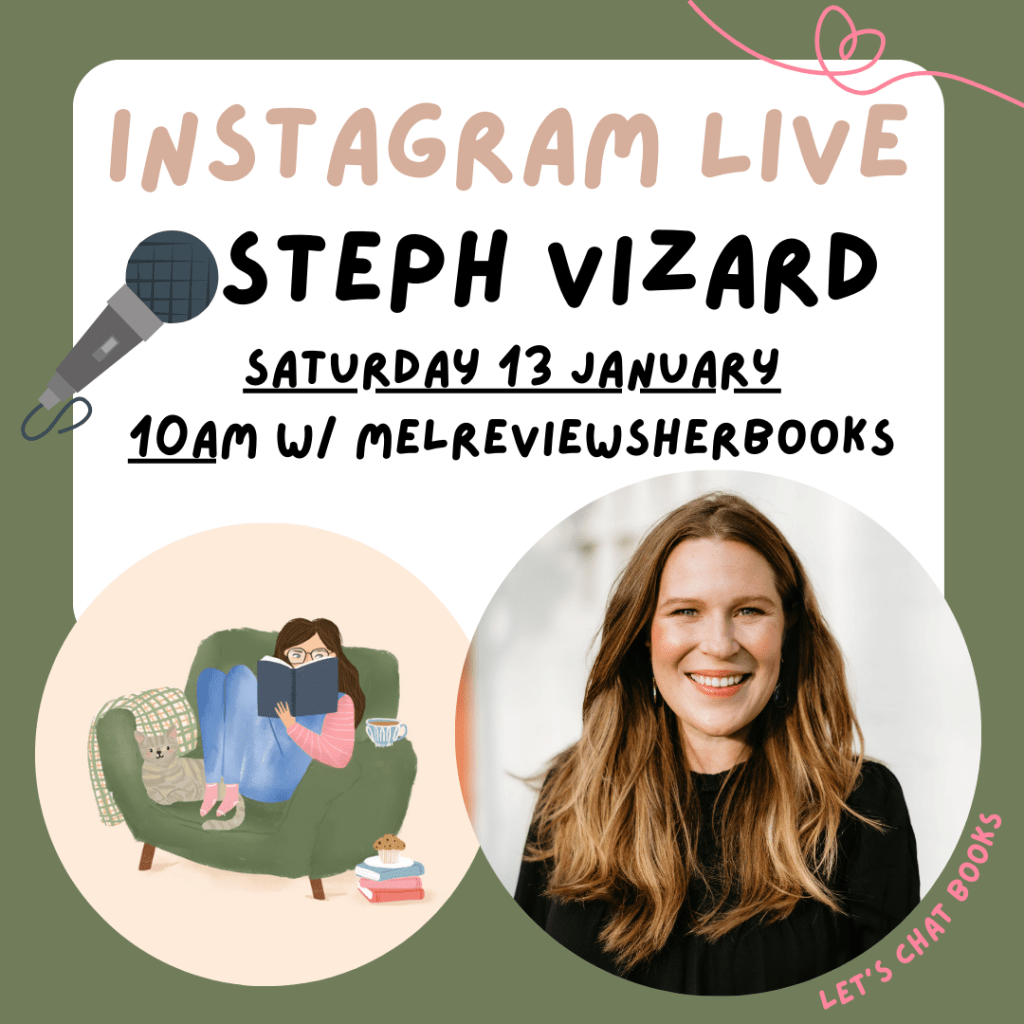
Steph, thank you so much for sharing your time with us on Author Talks & Instagram Live Saturday 13 January šŸŽ„ā€‚

I wish you all the best and can guarantee that I’ll be pre-ordering your next novel!

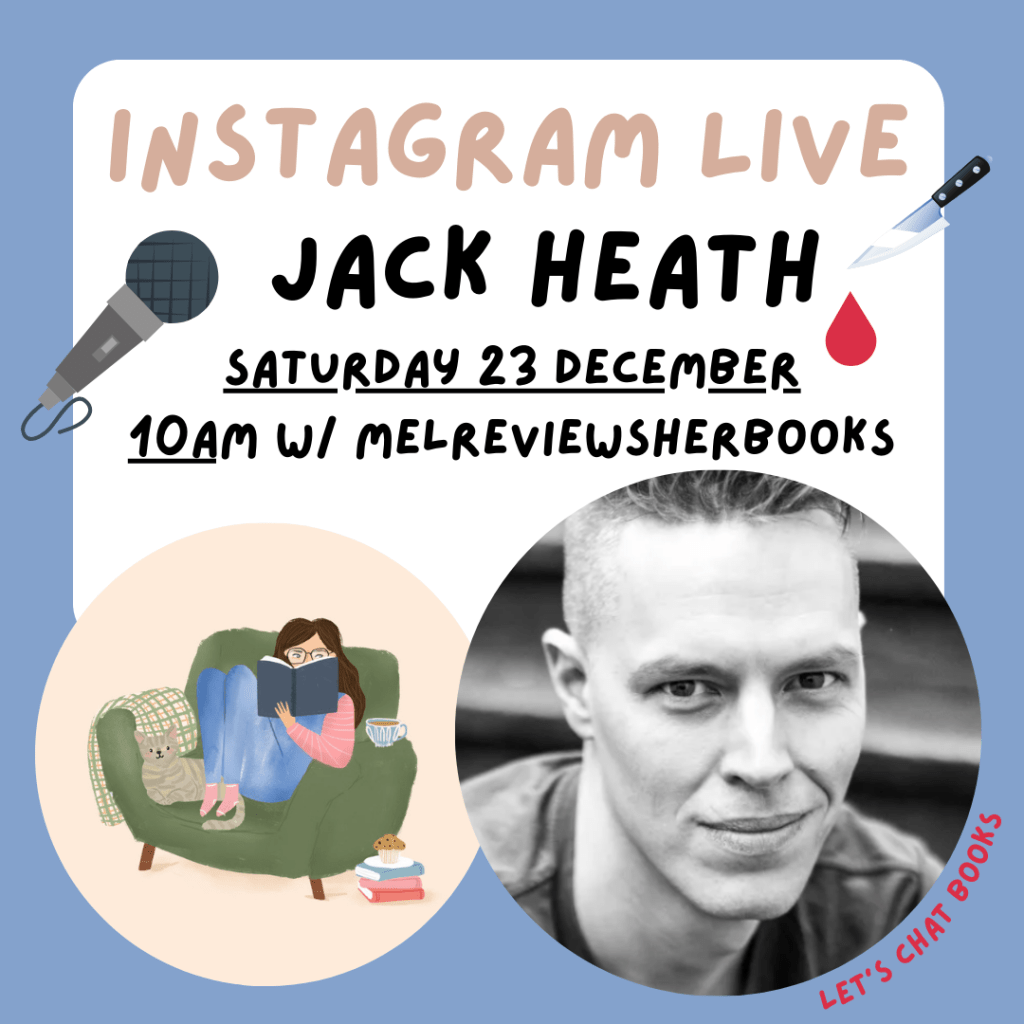
Author Talks with Jack Heath šŸ”Ŗ

Bestselling Australian Author, Jack Heath šŸ“ø Curtis Brown Agency

Jack Heath is the #1 bestselling author ofĀ 40 novels, published in nine languages. Jack’s first crime thriller,Ā Hangman, was voted one of the 100 best books of all time (twice) – and I think Kill Your Husbands won’t be far behind! His mission is to create books that inspire a love of reading in children and adults.

Welcome Jack, to Mel Reviews Her Books 😊

Jack, Kill Your Husbands is certainly a unique storyline! I mean, we have murder, a touch of romance, a LOT of suspicion and a partner swap! How and where were you inspired to write Kill Your Husbands?


I used to rent a beach house with my old high school friends every year after exams were over. There would be drinking, truth or dare, more drinking, and (my favourite) games of murder in the dark. We’d creep around the house with the lights out, and when someone screamed, we’d all get together in the room with the “body” and try to work out who the killer was.

I wanted Kill Your Husbands to be just as much fun as those games were.

Writing 7 different perspectives is not an easy feat in the slightest. Why did you choose to split perspectives rapidly in each chapter and do you feel its effect was achieved? (I certainly do!)


When I was a kid I read a murder mystery where the killer turned out to be the narrator, which blew my mind. For Kill Your Husbands I set myself a challenge – what if the killer was the narrator, and the reader knew it from the start, but they didn’t know which narrator?

In a world where ChatGPT exists, human writers can compete by focusing not just on the characters’ emotions but the readers’. Splitting the perspectives and tightly controlling the flow of information was the only way to create the effect I wanted.

In person and online, you’ve spoken openly about the challenges of making it into the book industry and rewriting, rewriting and rewriting your work before sending it off to be published. 40 novels down the line, what does that process look like for you now?


Things have changed a bit. At the start of my career, I’d write a book and then hope I could find a publisher to sell it to. These days publishers often come to me and ask me to write something for them. This means my income is much more stable, but it also means less creative freedom. I have to outline everything before I write it, and I have so many readers that I’m locked in to certain genres. Nice problems to have, I know!

Our main Police perspective, Kiara, is a recurring character for you. Kiara ends Kill Your Husband by exploring new cases and she’s stepped up into higher ranks as a Detective. Do you feel like there is another story left for her yet?


I hope so! I’ve learned not to plan out long series, because often a book won’t sell well enough to warrant a sequel. I also have several contracts for non-Kiara books, so I’ll be pretty busy either way. But the response to Kill Your Husbands has been tremendous, so I think there’s a market there for another Kiara book if I chose to write one. What do you think of Kill Your Boss?

Kill Your Boss sounds absolutely terrifying! Can’t wait to read it šŸ˜‰ Jack – thank you SO MUCH for spending your time here on Author Talks. I’m so pleased to have had the opportunity to chat again (virtual this time), it’s always a pleasure šŸ“š

You can find all of Jack Heath’s books via this link: Click Here ā­ļø

Author Talks with Emma Grey

šŸ“ø Australian Author, Emma Grey, holding her most recent novel The Last Love Note

Emma is a novelist, feature writer, photographer, professional speaker and accountability coach. She is also 100% fabulous, of which I can confirm because we’ve now met twice in person šŸ’– Emma has such a kind soul and her clever, compassionate and open ability to connect with readers really does makes her one of a kind.

Welcome Emma, to Mel Reviews Her Books šŸ’«

Emma, you have created a uniquely beautiful romantic novel. Grief is a topic and emotion that you bravely speak openly about in person and on your social media streams. Was it daunting for you to send The Last Love Note into the world?

It was very daunting. I think I spent the two weeks leading up to the January release in a ball of anxiety, wanting to hide from the world. It was all the usual doubts authors have – what if people don’t like the story or the writing? But it was also, ‘What if people criticise the portrayal of grief?’ Because that part was very real. I even worried my character, Kate, would be criticised for falling in love again after losing her husband. While the new love story was fictional, real life judgement in grief is unfortunately very real.

In addition to all of that, I also felt an element of ’survivor guilt’. This book exists because my husband died. And here I am, being published here and overseas, going on book tours, meeting amazing Wagga booksellers and bloggers … none of that would have happened if my real-life story had been different. I’ve had to remind myself that Jeff would have thoroughly embraced all of this for me, and that it was my own hard work that led to these things – not just the circumstances that inspired the novel.Ā 

Gosh, what a complicated answer! I was also really excited about launching the book, once I ploughed through those other emotions 😊

You’ve just been to the USA on an author journey ahead of the November launch! What are you most excited about, seeing The Last Love Note on American bookshelves and in the hands of American readers?Ā 

The story has a strong connection to New York. I’m from Australia, but my husband was president of the Society of Military History, based in the US. Six years ago, I was flown there for a memorial conference, just a few months after he died.Ā 

It was while I was away that I had my ā€˜Byron Bay moment’ – the space to really let my grief unravel without my little boy around. I plunged to the depths of grief in an American hotel room … but then I visited New York. 

That’s a city that has experienced griefĀ en masse. Yet the show goes on. The city is so endlessly vibrant and lit up. While I was there, I caught a glimpse of that vibrance for my own future. I believed for the first time that perhaps I, too, still had a life ahead of me.Ā 

That’s when I decided to start writing this book. I took myself to the New York Public Library and wrote some paragraphs, just to make a symbolic start. They appear in the novel as the excerpt from my character Kate’s book.Ā 

It’s why it feels so ā€˜full circle’ for me to be returning to the US now with a New York publisher, Zibby Owens. I feel like I’m on the way to creating the exciting future that city promised me all those years ago…

What’s next for you Emma? In your author life, in your writing life, in your journey?

I’m excited about touring America at the end of the year, including speaking at the Miami Book Fair, and celebrating my first Thanksgiving ever in the Hamptons. 

My new book, PICTURES OF YOU, will be published by Penguin Random House and Zibby Books in April 2024. It’s a romance, with a dash of psychological thriller. 

I’ve got some exciting plans to stage the musical I co-wrote with composer Sally Whitwell, based on my teen novel UNREQUITED. Our show, DEADPAN ANTI-FAN, is a story written for my then 14-year-old non-reader, who loved Harry Styles, to show her reading could be fun! 

A widowed friend who is a comedian has floated the idea of working together on WIDOWED: THE MUSICAL, which would be an amazing project. I’m also keen to work with a producer and composer on a TV documentary about the dementia choir my parents belonged to before my mum’s death. 

In less glamorous, but important news, I’m working with a colleague to put together some awareness-raising programs to help companies and services deal more kindly and sensibly with grieving customers. 

Then there are the new book ideas … I’m hoping to keep up with the release a book each year. 

Of course, I squeeze all of this around my copywriting work for government departments and other clients, and I’m also an accountability coach, so there’s always a lot happening.

Emma, thank you so much for your time and answers! It has been an absolute pleasure to have you on the blog and a chat over on Mel Reviews Her Books Instagram šŸŽ¤

Author Talks with Nell Pierce

Nell Pierce is the prestigious winner of the 2022 Australian/ Vogel’s Literary Award. This award is presented to an unpublished author and their manuscript, in the hopes of finding Australia’s next BIG literary author and launching their writing career. Nell Pierce was this year’s winner. Nell is already topping charts and our very own Literary Lovers Book Club is very excited to read Nell’s ‘A Place Near Eden’ for the month of July.

Welcome Nell and thank you so much for being a part of my Author Talks space online! It is an absolute privilege and pleasure to be discussing your debut novel and writing experience with you 😊

Nell, how does it feel to be a debut novelist and award winner all wrapped up in one? Congratulations 🄳

Thank you! It feels pretty great!!

I wrote a lot of A PLACE NEAR EDEN when I was living in New York. I was working as a literary agent, which was fun and fast paced (and also sometimes quite stressful) and before work I’d go to a Pret near the office to do a little writing. My job involved working with authors and helping them get published, so it was very inspiring but also sometimes a reminder of how hard publishing can be. I made my peace with the fact that my novel might end up only being read by my mum and dad. I just enjoyed the process of writing and having that part of the morning that I dedicated to myself. It was nice to have a project to work on that was just for me. I’d sit down with a coffee and sometimes some oatmeal or a yogurt and get out my laptop and that half hour was a little luxury.

When I found out I’d won the Vogel I was pregnant with my daughter, who was born around the same time the book published. It was funny timing, because I’d kept my pregnancy a secret for the first trimester, and had just started telling people, and was feeling really relieved not to have the burden of a secret anymore. I’m a terrible secret keeper, especially with happy secrets, like having a baby, I just want to tell everyone. So then, just when I thought my secret keeping was over, I got another happy secret when I found out I’d won the Vogel. I found out in September but I wasn’t allowed to tell anyone until the announcement was made in May of the next year. In the meantime, I worked with Allen and Unwin to edit the book, which was a fantastic experience.

I guess in summary I’m feeling really lucky!

What was your turning moment that made you click “submit” on your manuscript for The Australian/ Vogel’s Literary Award?

It was my partner, Mark, who convinced me to submit to the Vogel. I’d been working on the manuscript for so many years, I think I could have kept working on it forever! The Vogel’s Literary Award was a great deadline to help me stop working on the manuscript and start thinking about moving onto something new. And then when I won, I got to go back into the manuscript and start editing. It was very hard to part with the pages when it was time to finally turn them in. Even now, I’ll be in the shower, and I’ll think of a paragraph or passage that I wish I’d included.

Have Tilly, Sam and Celeste’s story always been with you? How did they come about and then their written stories come to fruition?

I really love the area around Eden on the south coast of NSW. I used to visit there a lot as a kid, and I love the ocean, the contrast between the calm inlet waters and the surf beaches, the gum trees and bush, and the sense of wildness in the rugged landscape. When I was living in New York I really missed that landscape, and so I started writing something set there so that I could mentally visit even though I was physically so far away. So I started with the setting even before the characters. Maybe because I spent a lot of time around Eden when I was a teenager, I started to think about a coming of age story in that setting. And, I think, the landscape around there is beautiful but also, especially in the context of ocean rips, sometimes dangerous, and so I think that gave rise to some of the darker themes in the novel.

After I had the setting, the characters of Tilly, Sem and Celeste came next. When I was coming up with their characters I was thinking a lot about the ways that we’re responsible for other people, especially the people we love, and also about the ways we can fail in that responsibility. I think Michael Ondaatje’s THE ENGLISH PATIENT touches on this in a way. Ondaatje’s characters claim that they are not ā€˜beholden’ to each other, despite their romantic relationships. I think about that a lot, perhaps because I struggle to understand it. I’m not able to have cool and detached relationships like that. So in my novel I wanted to explore the ways that we are all beholden to each other, and what it looks like to fail in those obligations.

From your experiences of working in Family Law Court of Australia, do you feel this has influenced your writing, depictions of characters and behaviours?

One thing that struck me when I was working at the Family Court was the way the parties to a relationship can have such different understandings of shared events. And I see it all the time in my own life as well. My partner and I have fought because he thought I was giving him unsolicited advice about his career when I thought he’d directly asked me for my input. Or there was the period he didn’t cook me mushrooms because he thought I’d said I don’t like them when in fact I love mushrooms and have no memory of saying anything to the contrary. And there’s nothing more frustrating and lonely than getting to the place where you just have to kind of ā€˜agree to disagree’ when you both just remember things differently. Those are small examples, but miscommunication and misremembering can easily turn into something much bigger. There can be a kind of horror in not knowing what the truth is, or having your idea of the truth disputed or disregarded, or not knowing who to trust.

I was captivated from the moment I started ‘A Place Near Eden’, until the moment I put it down. My favourite quote came from Sem and it surrounded his desperate need to make his own choices in a world where before the age of 18, jumping around homes and changing environments – he didn’t hold a lot of autonomy. My question to you is, where are you choosing to take your writing career from here? Are you a planner or choosing to let your creativity lead the way?

I am a planner! Some people can sit down and write a novel in a burst of passionate inspiration, but unfortunately I’m not one of those people. I like to take my time getting to know my characters and the setting and themes for the novel before I start writing. And I keep the first draft in handwritten form to remind myself that it’s just a draft and won’t be turned in or shown to anyone. That way I feel like I have the freedom to experiment and take risks. So that’s what I’m doing at the moment for my next novel. I’m experimenting with a few characters who knew each other in high school but are now in their thirties, and thinking about Melbourne, Amsterdam (where my family lives) and New York City. It can be tricky because sometimes I have ideas that I struggle to fit into my idea of the novel I’m working on. Like yesterday I had a vision of one of my new characters in her sixties, but I’m not sure if there’s room for that period of her life in the book. I try to hold all those ideas loosely and just see where it goes.

Thank you Nell for your time, care in response and well, your novel! It’s an absolute joy to have shared our interview onĀ melreviewsherbooks.comĀ šŸ’–šŸŽ™ Another big cheer for Allen & Unwin for sending me a copy of ‘A Place Near Eden’ for review and recommendation 🄳 To check out my review of Nell’s book, click here!

Author Talks with Isobel Beech

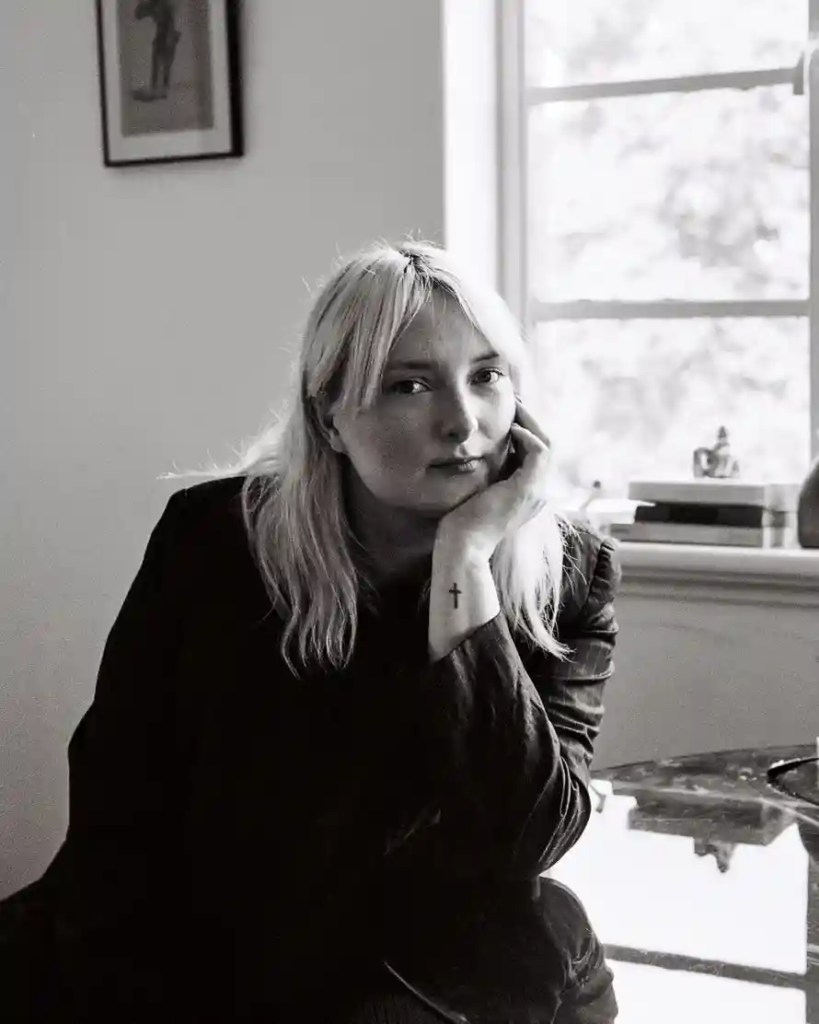
Isobel Beech is an up and coming, young Australian writer. Her first fictional novel ‘Sunbathing’, was published with Allen & Unwin this month (May, 2022). šŸ“ø by Claire Summers

Isobel Beech is going to take Australia by storm! With a background in copywriting, creative and internet news media, she is well versed in the book world. Her first book titled ‘How To Be Online and Also Be Happy’, was published in 2021. Her spectacular debut fiction called ‘Sunbathing’, has been published with Allen & Unwin this month (May, 2022).

Welcome Isobel and thank you so much for being a part of my Author Talks space online! It is an absolute pleasure to be discussing your new novel and writing experience with you šŸ˜ŠšŸ’¬

Isobel – wow congratulations on such a moving debut novel! How long has it been in your heart to write fiction? Have you always seen fiction in your writing journey?

Well, I only started doing writing stuff around ten years ago but the first few things I ever wrote were fiction because I was studying a Bachelor of Creative Writing at RMIT. A lot of the curriculum revolves around poetic and narrative-based writing techniques, so I suppose I learned how to write – or learned how I might someday want to write – with fiction.

Ā I’ve done a fair bit of non-fiction writing since then for online and print media but fiction writing is just less of a pressure cooker I think. It’s so much more open-ended, so much more creative, you can really go wherever with it and say whatever needs to be said. And with it you can build the worlds you wish you lived in, or the worlds you wish you had access to. Like with Sunbathing, so much of the driving force behind the story there is about having a final conversation with a person you’ve already lost. That kind of closure you can only dream about. Writing this book gave me that.

The feeling of your writing style had me captivated from the very instant I started reading Sunbathing. That feeling of connection didn’t waver and had me finishing your novel in less than 48 hours. How long did it take you to plan, write and have Sunbathing published with Allen & Unwin?

Thank you! I’ve heard that people are finishing it quickly which I definitely take as a compliment; I love being able to read a book in a couple of days, I think it really helps to feel like you’ve been transported and lived it yourself.

And I didn’t plan the writing process at all really, I just began. I was at a writing residency in Italy and just wasn’t sure what to do with my time; I wasn’t feeling very motivated or like I had anything worthwhile to say at the time, so I just started writing some stuff down to pass the time. Things I saw that day, dreams I had, the smells and sounds around me. Then the document gained momentum and I began to find bits I liked in it that I wanted to interrogate more. And then I realised I wanted to bring the grief stuff into it – something I was kind of wading through at the time. 

The writing of the first manuscript took around three weeks, then probably six months to sort out and edit and rearrange on my own. Which is remarkably quick for a novel, but I think I just had this spare time and was obviously really invested in telling this story and a lot of it wasn’t fiction – not the feelings or the essence of it – so it kind of tipped out of me. That was in 2019.

By the time I decided it was finished, I actually didn’t know if I wanted to share it with the world at all. Because it felt like a pretty big thing to write about and I was afraid of putting it out there, I guess. But I met with Kelly (from A&U) and we talked about how we saw the book and what it might mean to me or to others as a published thing and she just made the decision really easy. We edited it in 2021 between March and December, and so all up it was probably just under a two-year project. 

So, quick to write and quick to read as it turns out.

I really enjoyed the namelessness of the main female character. She is one person healing from grief, yet she is many. She is one 21st century woman, yet she is many. Through this, I ultimately felt extremely connected to her. What does her namelessness mean to you in the story? Did you begin with a character name or was she always nameless?

She was and absolutely for that very reason. I’ve always enjoyed being able to step right into a character and I feel like the less information you’re given about them – particularly the superficial stuff – just makes that easier.

In the beginning she was genderless, too, and a lot the talk of ā€˜women’ and ā€˜men’ stuff included ideas and feelings on gender identity and how there’s so much outside of that binary and what that means for us and our relationships. But in the editing process I was convinced, and rightly so, that these ideas weren’t being given enough air time within the narrative to be doing them justice. So we culled that stuff and she became a she. 

I think it works and is good, particularly for the function of her experiences as a daughter of a dad and what that means for their dynamic, but I’ll have to save the gender dysphoria for the next book.

What has the feeling been like for you, to walk into a bookstore and see your debut fiction novel on the shelf? Or turn on your social media to see your novel pictured, shared and reviewed with so much love?

It’s just a total smoothie of feelings right now! I feel lucky, confused, delighted, exposed. I had no idea what this time was going to be like but thinking about a few months ago, I realise I was being super pessimistic (my editor will attest to that). I just had this idea in my head that it was going to be really challenging, I guess because I’m writing about something that makes me feel vulnerable, and I was thinking I’d be having a hard time with it out there in the world, being consumed by people and commented on. But it’s just been the total opposite of that. It helps that people are saying really nice things about it, like I haven’t really been hit with any criticism yet so maybe ask me again then, but so far it’s felt like a really worthwhile thing to have done. 

A friend said to me the other day, like, how great it is that somehow, this thing that used to cause me all this agony is now the source of all this solace and warmth, and that’s true. I’m suddenly associating this pretty painful thing with good feelings, with these incredibly meaningful conversations and connections. And that’s just the most beautiful, strange, incredible thing.

Thank you Isobel for sharing a piece of your time with me on melreviewsherbooks.com šŸ’–

Author Talks with ‘Katrina Nannestad’

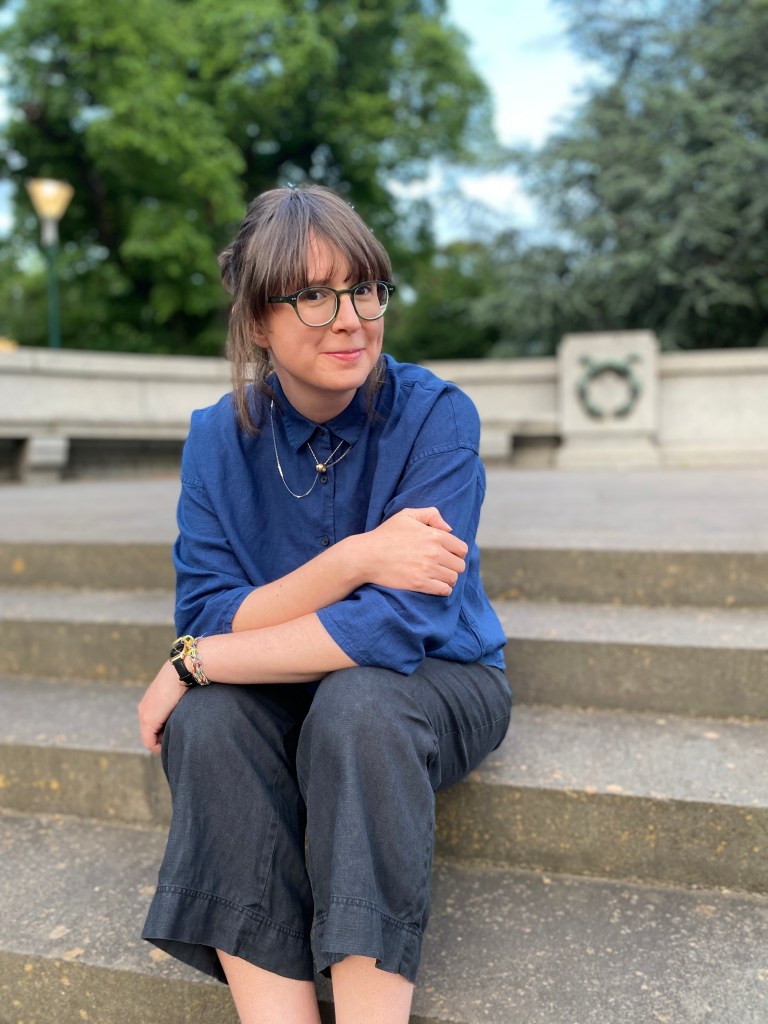
Katrina Nannestad is an Australian Children’s Author who spent a number of years of her childhood in Wagga. She is a multi-award winning writer and is pictured here with her beautiful pup.
šŸ“ø by Rebecca Rock

Hello Katrina and a warm welcome to melreviewsherbooks! It is an absolute pleasure to have such a talented and articulate children’s writer such as yourself featuring on my ‘Author Talks’. Katrina is the author of over 10 published children’s novels and we will be talking about two of her recent historical releases in this interview, those being ‘We Are Wolves’ and ‘Rabbit, Soldier, Angel, Thief’.

Katrina, congratulations to begin with on having your novel, We Are Wolves, awarded the winner of ARA’s Historical Children and Young Adult Novel of 2021, winner of the Book Links Award for Children’s Historical Fiction 2021, and winner of the ABDA’s Best Designed Children’s Fiction Book of 2021. Wow – when writing We Are Wolves, did you know you were onto something big?
I really enjoyed writing We Are Wolves. I found the research fascinating and fell in love with my characters as I wrote their story. But I wasn’t quite sure whether or not I’d created something worthwhile until my agent and publisher had read it. Their response and that of the early readers was encouraging. But still, I was most anxious to learn what young readers thought of the story. Once I got the thumbs up from my target audience, I was able to relax and get excited about writing further historical fiction.

Did you follow the same planning, research and writing process for Rabbit, Soldier, Angel, Thief as you did with We Are Wolves? If not, how was it different?
Yes, it was a similar process. I began by doing some reading around the topic before deciding what form my story might take. I spent some time developing my main characters, then took them with me – holding their imaginary hands – as I continued my research. Their presence helped bring the facts, the details and the big historic events alive, and helped me to decide what was relevant to their journey. Finally, I refined my plan and got writing.
But of course, the process is not quite so linear as that. There’s a lot of scrambling back and forth between all the steps, and extra research takes place right through to the very end.

World War II is known as such a dark, emotive and traumatic time in our world history. What has inspired you to write two novels set in this time period?
I stumbled across the story of the Wolfskinder (We Are Wolves) by accident. I hadn’t planned to write a war story, but what I read about these children amazed me – that they survived on their own in a hostile environment, sometimes for years after the war. I was also surprised that I’d never heard of these children before. I thought perhaps others were unaware of the Wolfskinder, too, in which case it would be meaningful story to tell.
I really enjoyed the challenge of writing We Are Wolves, and the response of readers was positive, so I was keen to attempt a second war novel. Again, with Rabbit, Soldier, Angel, Thief, I have tried to share a lesser-known aspect of the Second World War.
I think it’s really important that young people are aware of the events that have shaped our world, and many are keen to explore big issues. Historical fiction allows them to discover these stories in a format that is accessible – interesting and age-appropriate.

In Rabbit, Soldier, Angel, Thief, Sasha is a 6-year-old boy thrown into a war-torn and violent journey that will shape him forever. How do you ‘get into character’ per-say and write from the perspective of a young male child?
I always try to live in the story with my main character, whether I’m writing comedy, mystery, adventure or history. It’s the way I work, and I don’t really know any other way to do it. I can’t dip in and out. I need to be emotionally involved, to feel like the characters and setting and events are real.
I had to do a lot of research for Rabbit, Soldier, Angel, Thief, because I knew so little of the war from the Soviet point of view. My head became filled with details about Russian village life, the sufferings of the Soviet people, the Red Army, the Battle of Stalingrad, and the westward advance all the way to Berlin. But the thing that was most helpful in gaining an understanding of how a child might experience these events, was Svetlana Alexievich’s book, Last Witnesses: Unchildlike Stories. This book records Soviet people’s personal accounts of what they experienced as children during the Great Patriotic War (the Second World War). I have never been so affected by a book in my life.

My goodness Katrina, I have to admit, the last line of this novel broke me! Did you always know how Sasha’s story would end at the beginning of your writing process?
I had a fair idea of how it would end but played a lot with those last lines so they’d have maximum impact.
As I got towards the end of the story, I did consider a different conclusion. I actually wrote two endings, but my original idea won out!

From the bottom of my heart, thank you Katrina for joining me on ‘Author Talks’! It has been an absolute pleasure šŸ’ What’s next for you?

I am currently writing my third historical novel. It’s also set during the Second World War and tells the story of a little Polish girl. More will be revealed later!
At the same time, I am writing a lighter adventure series for younger readers (7-10-year-olds) called The Travelling Bookshop. Book 1 is out now and I’ve written the next two. You can take a peek at books 1 and 2 at www.harpercollins.com.au/cr-110017/katrina-nannestad/ šŸ“š
This year has been very quiet, of course, but I have some lovely bookish adventures penned into my 2022 diary already – writers’ festivals and school visits. I can’t wait to be out and about once again, sharing the delights of reading and writing and daydreaming with fellow enthusiasts.

You can find a number of Katrina’s books at Collins Booksellers Wagga Wagga online or in person.

For more information on Katrina and her books, you can visit her website, Facebook and Instagram šŸ“š