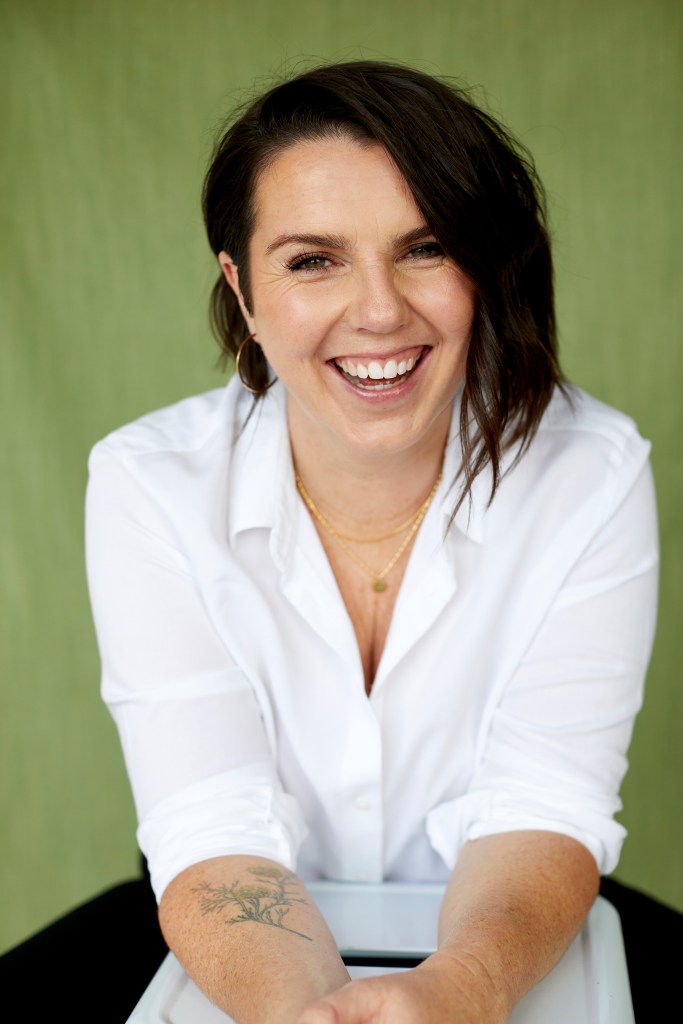
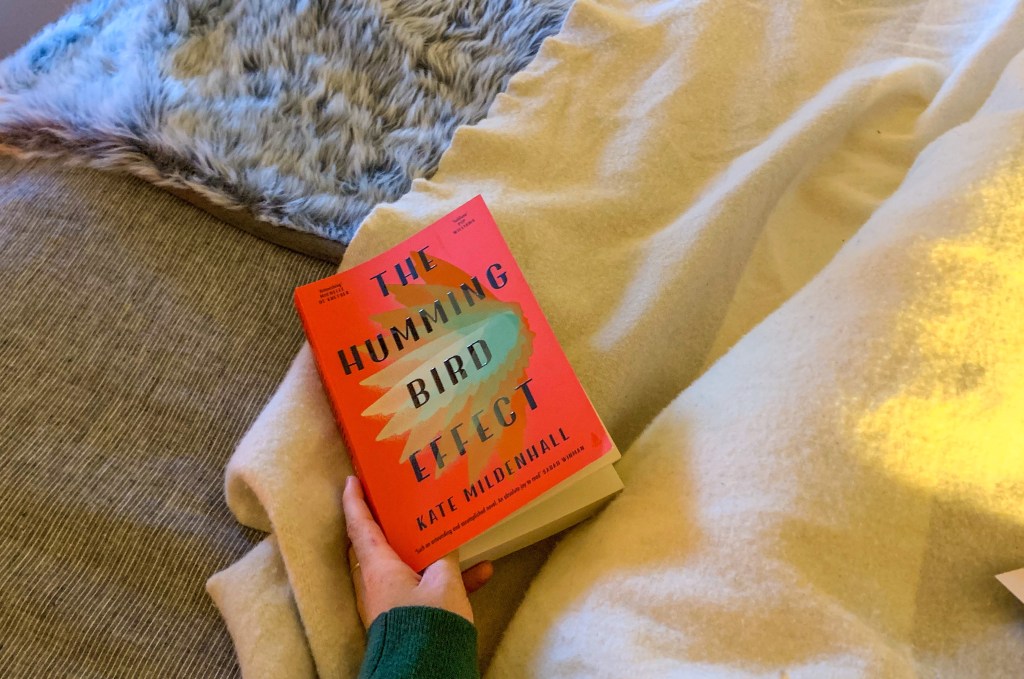
Kate Mildenhall is the author of Skylarking (2016) and The Mother Fault (2020) and most recently, The Hummingbird Effect (my favourite book of 2023!). She also co-hosts The First Time Podcast – conversations with writers.
Kate lives on Wurundjeri lands in Hurstbridge with her partner and two children. She is currently undertaking a PhD in creative process at RMIT University. She is currently working on her fourth novel.
Kate, welcome to Mel Reviews Her Books 💫💖👏🏼
The Hummingbird Effect has been at the top of my favourite 2023 novels since I finished it! Kate, where did the idea of The Hummingbird Effect start for you? Where were you and what were you feeling?
Thanks Mel! I can promise you that authors never get enough of readers enjoying their books! The seed for The Hummingbird Effect came from a story my uncle told at a family party, about a local abattoir that burned down years after it was decommissioned. He described how the many years of fat and sawdust in the floorboards meant that the fire was fierce and quick. That image immediately captured me – there is nothing quite like the electric feeling of a new story sparking in the brain – and led me to researching the Angliss meatworks in Footscray and the lives of the workers there, particularly the women.
What I found in the archives were references to a slaughtermen’s strike in 1933 against the new chain system of slaughtering – designed to make the process cheaper and more efficient as it required unskilled labour. It’s the same system used in abattoirs everywhere today. I started to think about the nature of progress, these moments of change throughout history on which the future pivots. The strike was unsuccessful and the chain system came in, but what if it hadn’t? What might that mean? These questions – through four years and lots of trial and error – led me to the creation of new narratives across the present and future which also explore the lives of women and their work and the nature of progress and innovation.
The 4 (and some would argue 5) interwoven storylines are all raw, addictive to read and confronting. How did you determine which character would take up more of the novel than another?
Before the novel looked like it does now, it only followed the 1933 story of Peggy and Lil. After some early (not great!) feedback from my publisher, and in the midst of Covid lockdowns I began reimagining the story to expand further into the future and thus tell the stories of multiple women all dealing with the same kinds of issues of change and labour – albeit in very different contexts (the four years and lots of trial and error part!).
The stories of Hilda in 2020, La and Cat in 2031 and Maz and Onyx in 2181 (and the river and the AI chatbot!) all poured out of me quickly but they were a mess. The fun (and tricky) part was reassembling them in a way that worked for the reader and helped to thread the connections I was hoping to make about the idea of unintended consequences. I’d read and loved novels like Michael Christie’s Greenwood, Jennifer Egan’s The Candy House and Anthony Doerr’s Cloud Cuckoo Land, and as an exercise, I parsed these books to find out exactly how and when the authors transitioned between narratives and how they kept the reader hooked to the page. This exercise inspired me to take risks with the way I broke up and connected the stories of each of my characters.
I love all of the women in The Hummingbird Effect and feel deeply connected to their characters – I wanted more story for all of them, but a book can hold only so much!
Can you explain to us a little bit about the jaw dropping diagram/algorithm that is inside The Hummingbird Effect? How was this created and what was the process of creation like?
I wanted to create an algorithm that could uninvent a human innovation in an attempt to save the world, but I knew I didn’t have the smarts to do it myself! Through the glorious network of writers I found visual designer Eva Harbridge – both a talented designer and deeply interested in ethical AI – and we collaborated to create the image that can be seen in the novel.
This was such an exciting, inspiring and deeply satisfying experience. Over three weeks we met online and discussed my research and ideas and sent hundreds of emails back and forth as our ideas took shape, and then Eva created a number of different versions of the diagram focussed on different components and styles, you can read a bit more about the process and see some of the images here.
I now want to work with Eva on every project I do. The collaboration was a vital part of my creative process and allowed me to see and connect parts of the novel I hadn’t done previously. Plus I get to see her beautiful design in the finished novel!
Kate, your storytelling is like nothing I’ve ever read before in the best way possible. I now want to consume ALL of your writing! Do you feel like writing and storytelling was always going to be your career path or was it unexpected?
I think the path for many writers is always a little meandering. I wanted to be a writer as a kid, and then life took me in other directions for a time. When my kids were born the urge to write returned in a visceral way, and I applied for and began the Professional Writing and Editing course at RMIT. This was the best decision I ever made, leading directly to me beginning, and subsequently getting published, my first novel Skylarking.
Luck plays a huge role in getting published, along with perseverance and some degree of talent! It’s something many of our guests talk about on The First Time podcast when they tell their own path to publication stories. I’m so grateful that I followed the instinct to get back to the page, and then for the many serendipitous moments that have allowed me to
keep writing books since then.
Kate, thank you SO MUCH for spending the time to share a little part of your experiences and writing with me on Author Talks. I’m so grateful to have had the opportunity to meet at WAM and create a connection 💫😊
 Mel Reviews Her Books